
 Español
 Pусский
 Français
 العربية


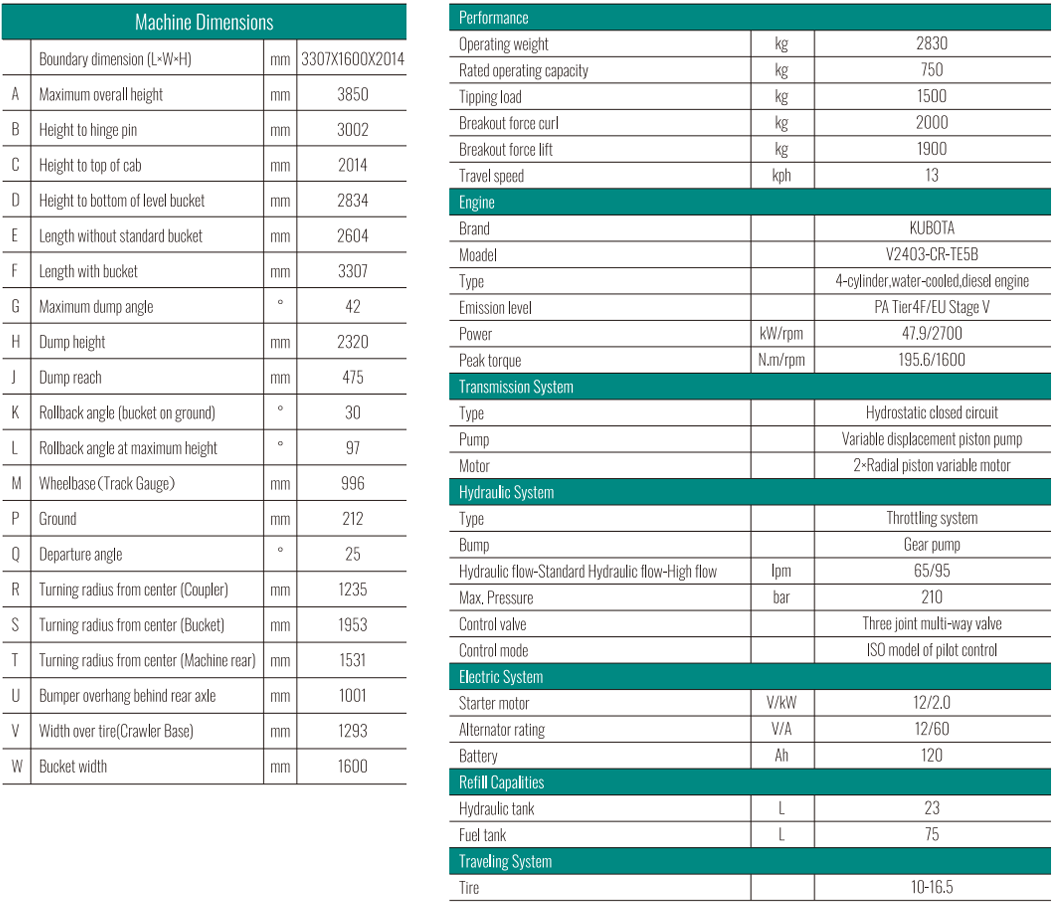
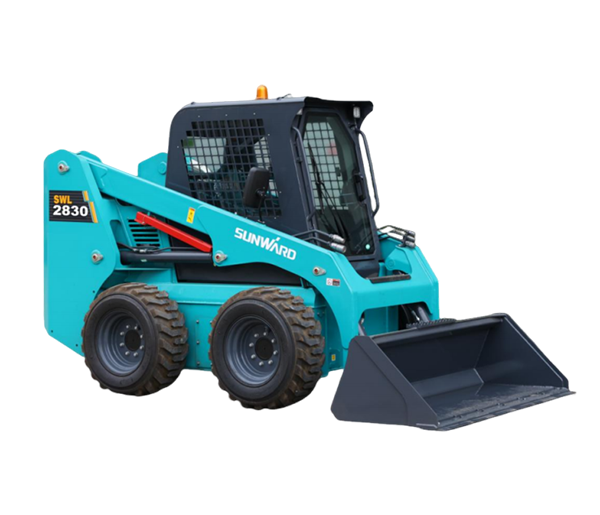
When I design a skid steer loader, I do not start by asking how much power I can put into a machine. I start with a more practical question: what will the operator need to do with it every day?
A skid steer may be used to move soil in the morning, load materials in the afternoon, prepare a work area the next day, and clear snow or vegetation later in the season. The machine needs to be compact, easy to control, strong enough for repeated work, and flexible enough to use different attachments.
That is the thinking behind our HKLOONG skid steer loader. At HKLOONG Heavy Industry Technology (Hefei) Co., Ltd., I work across equipment R&D, precision manufacturing, quality testing, customized modification, and global distribution. Our goal is to build equipment around real working conditions rather than simply adding specifications to a brochure.
Our skid steer loader features strong power, high reliability, low operating noise, energy-conscious operation, and a practical attachment system. I have also focused on an independently developed arc lifting mechanism, ISO pilot operating mode, international universal quick-change device, bucket floating, automatic leveling, and easy maintenance access.
The result is a compact machine that can support construction, landscaping, agriculture, property maintenance, snow removal, material handling, and other jobs where space, flexibility, and daily productivity matter.
1. What Is a Skid Steer Loader?
A skid steer loader is a compact four-wheel machine that uses independent drive control on the left and right sides to steer. Instead of turning the front wheels in the same way as a conventional loader, the machine changes the speed or direction of the wheels on each side.
This gives the skid steer a very small turning path. In some working conditions, it can rotate within its own footprint. That is a major advantage when the jobsite is crowded or space is limited.
I find this particularly useful in residential construction, landscaping, farm yards, warehouses, road maintenance, and small construction areas. A large Wheel loader may have more capacity, but it can be difficult to position in a narrow working area. A compact skid steer can often get closer to the actual work.
The front attachment is another important part of the machine. A standard bucket can handle soil, sand, gravel, mulch, stones, and other loose materials. With compatible attachments, the same machine can also perform grading, trenching, drilling, sweeping, snow removal, vegetation cutting, pallet handling, and other jobs.
Current industry models show how broad this equipment category has become. The current Bobcat S650, for example, lists 58 available attachments on its product page, along with a 74 hp engine and a rated operating capacity of 2,690 lb in its current North American specification. :contentReference[oaicite:0]{index=0}
| Typical Skid Steer Function | Common Attachment | Typical Work |
|---|---|---|
| Material handling | General-purpose bucket | Soil, sand, gravel, mulch and waste |
| Load handling | Pallet forks | Pallets, building materials and supplies |
| Ground preparation | Grading blade or rake | Leveling and surface preparation |
| Digging | Auger or trencher | Posts, irrigation, cables and drainage |
| Cleaning | Sweeper | Roads, yards and paved areas |
| Vegetation control | Brush cutter or mulcher | Grass, brush and land clearing |
| Snow removal | Snow blade or blower | Driveways, roads and commercial areas |
Source: Application examples are based on common skid steer attachment categories published by major equipment manufacturers. Exact compatibility depends on loader configuration and attachment requirements.
2. How My Skid Steer Loader Works
The operating principle is simple, but the system behind it is carefully coordinated.
Power from the engine is transferred through the hydrostatic drive system to the wheels. The left and right drive systems can be controlled independently. If both sides move forward at similar speeds, the machine travels forward. If one side moves more slowly, the machine turns. If the sides move in opposite directions, the loader can pivot around a very small area.
This is why I describe the skid steer as a machine designed for controlled movement rather than simply transportation.
The lifting system works separately from the drive system. Hydraulic cylinders raise and lower the lift arms and tilt the attachment. When a hydraulic attachment is installed, the auxiliary hydraulic circuit can provide power to the attachment.
This makes hydraulic performance important. A general-purpose bucket does not have the same hydraulic requirements as a Hydraulic Breaker, stump grinder, mulcher, snow blower, or trencher.
For example, the current Bobcat S650 lists 23 gpm standard auxiliary flow and 30.5 gpm high-flow auxiliary output, with 3,500 psi auxiliary system pressure. These figures are useful as an industry reference, but they are not HKLOONG specifications. :contentReference[oaicite:1]{index=1}
CASE provides another useful industry reference. Its SR175B skid steer loader is rated at 67 hp and 1,750 lb rated operating capacity, with standard auxiliary hydraulics listed at 20.6 gpm and 3,050 psi. :contentReference[oaicite:2]{index=2}
| Industry Reference Model | Power | Rated Operating Capacity | Standard Auxiliary Flow | High Flow |
|---|---|---|---|---|
| Bobcat S650 | 74 hp | 2,690 lb | 23 gpm | 30.5 gpm |
| CASE SR175B | 67 hp | 1,750 lb | 20.6 gpm | Not stated on cited page |
Source: Official Bobcat and CASE product specifications. These are external industry reference figures only and should not be interpreted as HKLOONG specifications. :contentReference[oaicite:3]{index=3}
3. Arc Lifting Mechanism and Operator Control
One area where I have invested in independent development is the lifting mechanism. Our skid steer loader uses an independently developed arc lifting mechanism.
I keep the basic structure straightforward while focusing on load-bearing ability and reliable operation. For the operator, the important point is not the name of the mechanism. What matters is how the lift system behaves during repeated loading, lifting, dumping, and attachment work.
A skid steer may perform hundreds of lift cycles during a working day. The lift arms need to handle repeated loads while giving the operator predictable movement.
I also use an ISO pilot operating mode. The controls are designed for easy operation, flexible movement, and good inching performance.
In simple terms, good inching means the operator can make small movements when precision matters. This is useful when positioning a bucket next to a wall, placing material beside a curb, moving around a tree, or working close to another machine.
Operator control is not a small issue. A machine with strong power can still be difficult to use if its controls are not easy to understand. I prefer a control system that gives the operator a clear relationship between joystick movement and machine response.
4. Main Features That Make My Skid Steer Loader Practical
Strong Power for Repeated Work
I design the machine for repeated working cycles rather than occasional use. Material handling, pushing, lifting, digging, and attachment work all place different demands on the machine. The power system needs to work together with the hydraulic and drive systems.
Universal Quick-Change Device
One of the most useful features is the international universal quick-change device. It allows compatible attachments to be switched more easily.
That means the loader does not need to remain a bucket machine all day. A contractor can use a bucket for loading, change to a grading tool for surface preparation, install a sweeper for cleaning, or use a snow attachment when the season changes.
Of course, attachment compatibility must always be checked. Mounting dimensions, hydraulic flow, pressure, attachment weight, and electrical connections can differ from one tool to another.
Bucket Floating Function
The standard bucket floating function allows the bucket to follow the working surface in suitable applications. This can be useful during cleanup and certain grading operations where the attachment needs to move naturally with the ground.
Automatic Leveling
The automatic leveling function helps maintain a controlled bucket position during selected lifting movements. It can reduce the amount of repeated manual correction required from the operator.
Low Noise and Energy-Conscious Operation
Many skid steer loaders work close to people. Landscaping, property maintenance, municipal work, and residential construction can all take place near homes and public areas. I therefore consider operating noise and energy use part of practical machine design.
All-Around Maintenance Space
Maintenance access is another point I do not want to overlook. Our design provides all-around maintenance space so operators and technicians can reach components that need inspection or service.
For me, easier maintenance means fewer unnecessary delays. A machine spends its working life outside the showroom, and that is where service access really matters.
5. Skid Steer Loader Performance: What Should Buyers Compare?
When I help customers evaluate a skid steer loader, I recommend looking beyond engine horsepower. A machine's working ability is determined by several connected factors.
Rated operating capacity tells the buyer how much load the machine is designed to handle under the relevant rating standard. It should be considered together with tipping load and attachment weight.
Hydraulic flow matters when the loader will operate powered attachments. Higher-flow tools may require a machine configured for higher auxiliary flow.
Lift geometry affects where the machine can place a load. Radial-lift and vertical-lift designs behave differently and should be selected according to the intended work.
Operating weight matters for transport, ground pressure, stability, and site access.
Turning ability is especially important for compact jobsites. A skid steer is valuable partly because it can work efficiently in areas where larger machines have less room.
For context, the current Bobcat S650 lists 3,777 kg operating weight, 1,282 kg ISO rated operating capacity, 2,564 kg tipping load, 3,149 mm hinge-pin height, and a 2,106 mm turning radius in one published configuration. :contentReference[oaicite:4]{index=4}
| Reference Parameter | Bobcat S650 Reference | Why It Matters |
|---|---|---|
| Operating weight | 3,777 kg | Transport and machine stability considerations |
| ISO rated operating capacity | 1,282 kg | Load-handling capability |
| Tipping load | 2,564 kg | Stability reference |
| Hinge-pin height | 3,149 mm | High-level loading applications |
| Turning radius | 2,106 mm | Working in restricted spaces |
| Standard hydraulic flow | 87.1 L/min | Standard hydraulic attachment operation |
| High hydraulic flow | 115.5 L/min | Higher-demand hydraulic attachments |
Source: Official Bobcat S650 specifications. Values are external reference data and are not HKLOONG product specifications. :contentReference[oaicite:5]{index=5}
6. Where I Use the Skid Steer Loader
I design the skid steer loader as a multi-purpose machine because real customers rarely do only one kind of work.
Construction
On construction sites, the loader can move soil, sand, gravel, debris, and building materials. With suitable attachments, it can also support trenching, drilling, grading, sweeping, and material handling.
Landscaping
Landscaping is a natural application for a compact skid steer. The machine can work around buildings, fences, gardens, trees, and narrow paths. Buckets, landscape rakes, augers, trenchers, stump grinders, brush cutters, and sweepers can expand its role.
Agriculture
Farm operators can use a skid steer for moving feed, soil, manure, hay, pallets, and other materials. Grapples and forks can make material handling more flexible.
Property and Municipal Maintenance
Property maintenance teams need machines that can do many small jobs. Sweeping, loading, grading, vegetation control, and seasonal cleanup can all be handled with compatible tools.
Snow Removal
With the right snow blade, snow pusher, or snow blower, the machine can support winter maintenance. This also helps contractors use the same base machine across different seasons.
Material Handling
Pallet forks and other handling tools can turn the skid steer into a compact material-moving machine for construction sites, nurseries, yards, and industrial areas.
7. How I Manufacture and Test the HKLOONG Skid Steer Loader
At HKLOONG Heavy Industry Technology (Hefei) Co., Ltd., I combine R&D, precision manufacturing, quality testing, customized modification, and global distribution.
I start with the machine's working purpose. The frame, lifting mechanism, drive system, hydraulic system, attachment interface, operator controls, and maintenance layout need to work together.
The structural parts are especially important. The lift arms and attachment mounting area experience repeated loading, so structural design, welding, machining, and assembly quality all influence long-term reliability.
Hydraulic systems also require careful assembly. Hydraulic lines need suitable routing and secure connections. Couplers need to match the attachment system. Clean hydraulic practices are important because contamination can damage pumps, valves, motors, and cylinders.
After assembly, quality testing helps verify the basic working functions. I focus on lifting and lowering movement, attachment connection, hydraulic response, steering, travel, control operation, and general machine condition.
I also understand that one standard configuration cannot cover every market. Customers may work in different climates, on different ground conditions, with different attachments, or under different transport requirements. For this reason, I support customized modification based on actual operating conditions and project requirements.
My approach is simple: the machine should be built around the job, not the other way around.
Why Choose HKLOONG for a Skid Steer Loader?
I believe a good skid steer loader manufacturer should provide more than a machine body. The customer needs engineering support, practical configuration advice, reliable manufacturing, quality testing, and after-sales technical communication.
At HKLOONG, my focus is on the complete machine.
Independent R&D: our arc lifting mechanism is independently developed for a practical structure and reliable load-bearing performance.
Flexible operator control: ISO pilot operation provides easy control and good inching performance.
Attachment flexibility: the international universal quick-change device supports compatible attachments.
Improved working efficiency: bucket floating and automatic leveling help reduce unnecessary manual corrections in suitable applications.
Maintenance access: all-around maintenance space makes service points easier to reach.
Customization: machine configuration can be discussed according to operating conditions, attachment requirements, and project needs.
Integrated manufacturing capability: R&D, manufacturing, testing, modification, and distribution are handled within our business system.
I do not expect every customer to need the same skid steer configuration. Instead, I want to understand what the machine will actually do and then match the equipment to that working condition.
Skid Steer Loader FAQ
What is a skid steer loader mainly used for?
A skid steer loader is mainly used for material handling, loading, grading, digging, site preparation, cleaning, vegetation management, snow removal, and other compact-site work. Its final function depends heavily on the attachment being used.
Why is a skid steer loader good for tight spaces?
The independent left and right drive systems allow the machine to turn within a very small area. This makes a compact skid steer useful around buildings, fences, trees, narrow paths, and other obstacles.
What is the difference between a skid steer and a wheel loader?
A wheel loader normally uses articulated or front-wheel steering and is well suited to larger material-handling jobs. A skid steer is usually more compact and can turn within a much smaller area. The right machine depends on material volume, site size, lifting requirements, travel distance, and attachment needs.
What attachments can I use with a skid steer loader?
Depending on the machine configuration, common attachments include buckets, forks, grapples, augers, trenchers, sweepers, grading tools, brush cutters, stump grinders, snow blades, snow blowers, hydraulic breakers, and other work tools.
Does every attachment fit every skid steer?
No. The mounting interface, hydraulic flow, hydraulic pressure, electrical connections, attachment weight, rated operating capacity, and other factors need to be checked before use.
Why is hydraulic flow important?
Hydraulic flow determines how much hydraulic oil the auxiliary circuit can supply to a powered attachment. Some attachments can operate with standard flow, while higher-demand tools may require a high-flow configuration.
What does bucket floating mean?
Bucket floating allows the bucket to follow the ground surface in suitable applications rather than being held rigidly by the lift system. It can be useful for cleanup and selected grading tasks.
Can HKLOONG customize the skid steer loader?
Yes. I can work with customers on configurations based on working conditions, attachment requirements, operating environment, and project needs. The final machine specification should be confirmed according to the actual application.
Final Thoughts
For me, the value of a skid steer loader comes from the balance between power, control, size, attachment flexibility, reliability, and maintenance.
A compact machine needs to do more than move forward and backward. It needs to work confidently in restricted spaces, handle repeated loading cycles, connect with useful attachments, and remain practical to service after many hours on the job.
That is the direction I follow at HKLOONG. Our independently developed arc lifting mechanism, ISO pilot operating mode, universal quick-change device, bucket floating, automatic leveling, and accessible maintenance layout are all focused on making the machine easier and more useful in real working conditions.
Whether the job is construction, landscaping, agriculture, property maintenance, snow removal, or general material handling, I want our skid steer loader to be a dependable working platform that can adapt as the job changes.
For customers looking for a compact skid steer loader, a hydraulic skid steer loader, or a customized machine for specific working conditions, I believe the right starting point is always the same: understand the job first, then build the machine around it.



 WhatsApp
 Phone
Phone E-mail
 Message