
 Español
 Pусский
 Français
 العربية


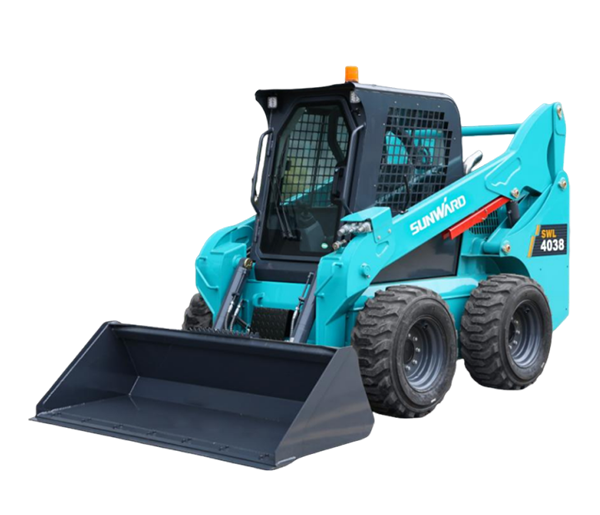
When I choose a skid-steer loader, I usually start with one question: how many different jobs can this machine handle without making the work complicated? A loader that can move materials is useful. A loader that can also clean, mill, clear snow, and use other attachments can be much more practical for contractors who need one compact machine for different tasks.
Our skid-steer loader is designed around this idea. It combines strong power, reliable operation, low noise, energy efficiency, and a compact structure with a quick-change attachment system. I can switch between different accessories according to the job instead of using a separate machine for every operation.
The machine uses an independently developed arc lifting mechanism. Its structure is relatively simple, with a strong load-bearing design and good reliability. The ISO pilot operating mode makes control easier and gives the operator good precision when carrying out small movements.
Standard bucket floating and automatic leveling functions also help improve working efficiency. At the same time, the machine provides an all-around maintenance space, making it easier to reach important service points during routine inspection and repair.
At HKLOONG Heavy Industry Technology (Hefei) Co., Ltd., we focus on equipment R&D, precision manufacturing, quality testing, customized modification, and global distribution. Our HKLOONG product range includes crawler excavators, Wheel loaders, Backhoe loaders, amphibious wetland Excavators, and other construction equipment designed for demanding working environments.
1. What Is a Skid-Steer Loader?
A skid-steer loader is a compact loader designed for work where maneuverability and attachment flexibility are important. Unlike a conventional wheeled loader that steers by turning its front wheels, a skid-steer loader changes direction by controlling the speed and direction of the wheels on each side.
This is where the name comes from. When the operator wants to turn, the wheels on one side can move at a different speed from the wheels on the other side. The machine can make very tight turns and, depending on the configuration and surface, can rotate within a small working area.
I find this especially useful on construction sites, roads, farms, warehouses, landscaping projects, and maintenance areas where there may not be enough room for a larger machine to maneuver.
The basic functions are familiar:
Lift and carry materials with a bucket.
Load loose soil, sand, gravel, and other materials.
Level and prepare working surfaces.
Clean work areas with sweeping attachments.
Perform milling or surface preparation with suitable tools.
Clear snow with snow blades, blowers, or other compatible attachments.
Use specialized attachments for different construction and maintenance tasks.
So I do not see a skid-steer loader as just a small bucket loader. I see it as a compact power unit that can operate a wide range of attachments.
2. How Our Skid-Steer Loader Works
The machine brings together a power system, drive system, hydraulic system, lifting mechanism, steering controls, and attachment interface. Each part has a specific job, but the overall performance comes from how well they work together.
| System | Function | Practical Benefit |
|---|---|---|
| Power system | Supplies energy for travel and working functions | Supports continuous loading and attachment operation |
| Drive system | Controls wheel movement on both sides | Provides tight turning and flexible positioning |
| Hydraulic system | Operates the loader arm and attachments | Provides lifting and attachment power |
| Arc lifting mechanism | Moves the loader arm and bucket | Combines simple structure with load-bearing capability |
| ISO pilot controls | Controls machine and working functions | Supports smooth and precise operation |
| Quick-change device | Connects different attachments | Reduces time required for attachment changes |
When I operate the machine, the left and right wheel groups can be controlled independently. This allows the skid-steer loader to turn within a very small area. For tight construction sites, this can save a surprising amount of time.
The hydraulic system powers the lifting mechanism and many of the available attachments. This means the same basic machine can perform very different jobs depending on what tool is connected to the front.
For example, I can use a standard bucket for loading material, then change to a sweeper for cleaning, a milling attachment for surface work, or a snow blower for winter maintenance when the machine and attachment specifications are compatible.
3. Arc Lifting Mechanism and Operator Control
One of the features I focus on is the independently developed arc lifting mechanism. The purpose is not simply to make the loader arm look different. The mechanism is designed around a relatively simple structure while maintaining the load-bearing capability required for daily work.
A simple mechanical layout can have practical advantages. Fewer complicated structural parts can make inspection easier, while a properly designed load path helps distribute working forces through the lifting system.
The loader arm is repeatedly exposed to loading forces. When the bucket enters a pile, lifts material, and carries the load, the working equipment experiences changing loads. Good structural design is therefore important for long-term use.
ISO pilot operating mode
The ISO pilot operating mode is another useful feature. I know that a new operator can find skid-steer controls confusing at first, especially when the machine has multiple functions and attachments.
The pilot control arrangement is intended to make machine operation easier and more precise. Smooth control is particularly useful when I need to make small adjustments around a truck, building, curb, pile, or other obstacle.
Good inching performance also matters. Not every task requires fast movement. Sometimes I need the loader to move only a few centimeters while positioning a bucket or attachment. Precise low-speed control helps with this kind of work.
4. Key Features That Make the Skid-Steer Loader Practical
Strong power with controlled operation
A compact machine still needs enough power to work. Our skid-steer loader is designed to provide strong working performance while keeping the operating system easy to control.
I do not judge power only by the engine rating. What matters to me is how the available power is transferred to the wheels, hydraulic system, lifting mechanism, and attachment.
Low-noise operation
Noise can become a problem on urban construction sites, landscaping projects, residential areas, and indoor work. A lower-noise machine can make communication easier and create a more comfortable working environment.
The actual sound level depends on the machine configuration, attachment, engine speed, surface, and working conditions, so I recommend checking the applicable test data for the specific model when noise limits are important.
Energy-saving design
Fuel consumption is an important part of equipment operating cost. A machine that uses energy efficiently can help control running costs over long working periods.
Energy efficiency does not come from one component alone. Engine matching, hydraulic efficiency, drive control, operating habits, attachment selection, and maintenance can all affect actual consumption.
Universal quick-change device
This is one of the most useful features for contractors who need flexibility. The international universal quick-change device allows the operator to switch between compatible attachments without treating every new task as a completely separate machine operation.
Depending on the attachment and machine configuration, applications can include cleaning, milling, snow blowing, material loading, grading, and other site-maintenance work.
Bucket floating function
The standard bucket floating function allows the bucket to follow the surface more freely in suitable operating conditions. This can be useful for cleaning, leveling, and light surface-following work.
Automatic leveling
Automatic leveling helps maintain a more consistent bucket position during lifting movements. For repeated loading work, this can reduce unnecessary manual correction and make the operator's job easier.
Easy maintenance access
I also pay attention to maintenance access because even a reliable machine needs regular service. Our skid-steer loader provides an all-around maintenance space so technicians can reach service points more easily.
Easy access can reduce the time needed for routine inspection and help maintenance personnel identify problems before they become larger failures.
5. Skid-Steer Loader Market Reference Data
Because the exact HKLOONG model specifications were not provided, the following table uses published data from established manufacturers only as an industry reference. These numbers are not HKLOONG specifications.
| Reference Model | Operating Weight | Rated Operating Capacity | Gross Power | Source |
|---|---|---|---|---|
| Cat 226D3 | 2,640 kg | 816 kg | 67.1 kW | Caterpillar |
| Cat 242D3 | 3,331 kg | 1,134 kg | 55.4 kW | Caterpillar |
| Bobcat S650 | 3,451 kg | 1,225 kg | 55.4 kW | Bobcat |
Caterpillar's published specifications list the Cat 226D3 at 2,640 kg operating weight, 816 kg rated operating capacity, and 67.1 kW gross power. Its 242D3 is listed at 3,331 kg operating weight and 1,134 kg rated operating capacity. Bobcat publishes the S650 at approximately 3,451 kg operating weight with a 1,225 kg rated operating capacity and 55.4 kW gross power. These figures are useful for market comparison but are not specifications for our machine. ([cat.com](https://www.cat.com/en_US/products/new/equipment/skid-steer-and-compact-track-loaders/skid-steer-loaders.html?utm_source=chatgpt.com))
The data also shows why buyers should not compare skid-steer loaders by engine power alone. Rated operating capacity, tipping load, hydraulic performance, machine weight, attachment compatibility, and lift geometry can all affect real productivity.
| Buying Factor | What I Would Check | Why It Matters |
|---|---|---|
| Rated operating capacity | Safe working load for the selected configuration | Helps determine what materials and attachments can be handled |
| Hydraulic performance | Flow and pressure requirements | Important for hydraulic attachments |
| Lift mechanism | Lift path and working geometry | Affects reach, loading and attachment positioning |
| Operating weight | Total machine weight | Influences stability, transport and ground pressure |
| Turning capability | Available working space | Determines maneuverability in tight areas |
| Attachment interface | Quick-change compatibility | Allows one machine to perform multiple jobs |
| Maintenance access | Access to service components | Can make routine maintenance easier |
For a contractor, this broader comparison is more useful than simply asking which machine has the highest horsepower. The right skid-steer loader is the one that matches the work.
6. Applications: One Loader, Many Jobs
The biggest advantage I see in a skid-steer loader is its ability to change roles. The base machine stays the same while the attachment changes according to the task.
Construction
On construction sites, I can use a bucket to move soil, sand, gravel, and construction waste. The compact design makes it useful where larger wheel loaders have difficulty working.
It can also support grading, site cleanup, material placement, and other general construction tasks when the correct attachment is installed.
Road maintenance
Road work often requires several different tools. A skid-steer loader can be configured with suitable attachments for cleaning, surface preparation, milling, or material handling.
This flexibility can reduce the need to bring multiple machines to smaller maintenance projects.
Snow removal
Winter maintenance is another strong application. With a compatible snow blower, snow blade, or other attachment, the loader can clear snow from roads, parking areas, sidewalks, commercial properties, and industrial yards.
Landscaping
Landscaping work often takes place in tight spaces. The machine can move soil, mulch, gravel, and other materials while using different attachments for grading, cleaning, and site preparation.
Agriculture
Farms can use skid-steer loaders for material handling, cleaning, loading, and general yard work. The attachment system gives the machine more flexibility than a standard bucket-only loader.
Industrial and warehouse work
Industrial yards and some warehouses require compact equipment for moving loose materials and maintaining working areas. Low-noise operation and compact dimensions can be useful depending on the environment.
| Application | Possible Attachment | Main Task |
|---|---|---|
| Construction | Standard bucket | Loading soil, sand and gravel |
| Road maintenance | Milling attachment | Surface preparation and milling |
| Site cleaning | Sweeper | Removing loose debris and dirt |
| Snow clearing | Snow blower or blade | Removing snow from working areas |
| Landscaping | Bucket or suitable tool | Moving soil and landscaping materials |
| Agriculture | Bucket or compatible attachment | General material handling |
7. How I Approach Skid-Steer Loader Manufacturing at HKLOONG
At HKLOONG, I do not see manufacturing as simply assembling an engine, hydraulic system, frame, and attachments. The machine has to work as one system.
Our company integrates equipment R&D, precision manufacturing, quality testing, customized modification, and global distribution. This allows us to work across different equipment types and application conditions.
Research and development
The independently developed arc lifting mechanism is an example of our focus on practical machine design. The goal is to create a lifting structure that combines a relatively simple layout with the load-bearing capability required for repeated work.
Structural manufacturing
The frame and lifting components experience repeated loads. Welding quality, dimensional accuracy, alignment, and component fit all deserve attention during production.
A skid-steer loader may look compact, but the working equipment can experience significant forces when the bucket enters a material pile or when hydraulic attachments are used.
Hydraulic integration
Hydraulic performance is especially important because many skid-steer attachments depend on hydraulic flow and pressure. The hydraulic system needs to match the intended attachment and working function.
Control and functional testing
We also pay attention to machine control, lifting movement, steering response, attachment operation, braking, and other functional areas during testing. The exact inspection process depends on the final machine configuration.
For international customers, I believe this process is important because the machine must be prepared not only for factory delivery but also for real work after it reaches the customer's site.
Why Choose HKLOONG Skid-Steer Loader?
When I select construction equipment, I want to understand the manufacturer as well as the machine. Product design, production capability, quality inspection, customization, and technical communication all affect the buying decision.
HKLOONG Heavy Industry Technology (Hefei) Co., Ltd. is headquartered in Hefei, China. We specialize in equipment R&D, precision manufacturing, quality testing, customized modification, and global distribution.
Our HKLOONG brand covers several types of heavy equipment, including crawler Excavators, wheel loaders, backhoe loaders, and amphibious Wetland excavators. This broader product experience helps us understand how different machines are used across construction, industrial, agricultural, and difficult terrain applications.
For the skid-steer loader, I focus on four practical points: maneuverability, attachment flexibility, working reliability, and maintenance access.
The international universal quick-change device is particularly useful for customers who need one machine to perform several tasks. Instead of purchasing separate equipment for every small job, the operator can use compatible attachments for cleaning, milling, snow blowing, material handling, and other operations.
We can also discuss customized configurations based on working conditions, operating environment, attachment requirements, and project needs. The final configuration should always be confirmed according to the specific machine and application.
Skid-Steer Loader FAQ
What is a skid-steer loader mainly used for?
A skid-steer loader is mainly used for loading, material handling, site preparation, cleaning, grading, and other compact construction tasks. Its quick-change attachment system also allows it to work with tools for snow removal, milling, sweeping, landscaping, and other applications.
Why can a skid-steer loader turn in a small space?
A skid-steer loader controls the wheels on its left and right sides independently. By changing the speed or direction of each side, the machine can make very tight turns. This gives it an advantage on small construction sites and other restricted work areas.
What is an arc lifting mechanism?
An arc lifting mechanism is a loader-arm design in which the lifting movement follows an arc-shaped path. Our independently developed design focuses on a relatively simple structure, strong load-bearing capability, and reliable working performance.
What is ISO pilot control?
ISO pilot control is a control arrangement used to operate the machine and its working functions. It is designed to provide straightforward control and good inching performance, which can help operators make small and accurate movements.
Can the skid-steer loader use different attachments?
Yes. With the compatible universal quick-change device, the machine can work with different attachments. Depending on configuration, these can include buckets, sweepers, milling tools, snow blowers, and other accessories.
Can I use this skid-steer loader for snow removal?
Yes. When equipped with a suitable snow attachment, the skid-steer loader can be used for snow clearing. The correct attachment should be selected according to snow conditions, working area, hydraulic requirements, and machine configuration.
Is a skid-steer loader easy to maintain?
Maintenance still needs to be performed regularly, but our design provides an all-around maintenance space to make important service components easier to access. Routine inspection should include hydraulic components, tires, drive systems, engine or power system, attachment connections, and other key parts.
Can HKLOONG customize the skid-steer loader?
Customization can be discussed according to the working environment, attachment requirements, operating conditions, and project needs. Specific options depend on the selected machine configuration and should be confirmed before production.
Final Thoughts
For me, the real value of a skid-steer loader is flexibility. A compact machine that can load materials is useful. A compact machine that can also clean, mill, clear snow, grade surfaces, and operate other compatible attachments becomes much more useful for contractors and equipment owners.
Our machine combines strong power, low noise, energy-conscious operation, an independently developed arc lifting mechanism, ISO pilot control, a universal quick-change device, bucket floating, automatic leveling, and convenient maintenance access.
I would not choose a skid-steer loader based on one specification. I would look at the complete working system: rated capacity, hydraulic performance, lift mechanism, turning ability, attachment compatibility, operating environment, maintenance access, and the type of work expected every day.
At HKLOONG, we combine R&D, precision manufacturing, quality testing, customized modification, and global distribution to build equipment around real applications. If you need a compact skid-steer loader for construction, a multi-functional skid-steer loader with quick-change attachments, or a flexible machine for cleaning, milling, snow removal, and material handling, we can discuss the configuration around your actual project.



 WhatsApp
 Phone
Phone E-mail
 Message