
 Español
 Pусский
 Français
 العربية


When I talk with farmers about a Square Baler, I usually start with a simple question: what are you planning to bale?
Hay, natural grass, wheat straw, rice straw, corn stalks and other crop materials can look similar when they are lying in the field, but they do not always behave the same way inside a baler. Moisture, material density, field condition, tractor power and the size of the windrow all affect the final baling result.
That is why I do not see a square baler as just a machine that ties grass into square packages. It is really a complete working system. The machine has to pick up the material cleanly, feed it steadily, compress it properly and tie the finished bale securely.
A good Square Baler should also be easy to understand and practical to maintain. Farmers normally do not want a machine that looks impressive but becomes difficult to operate when the harvest season gets busy.
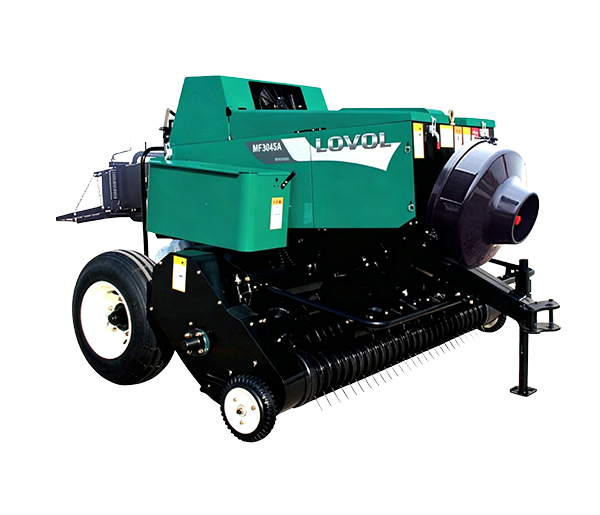
LOVOL's agricultural machinery range includes several square baler configurations. Its published 9YF Pick-up Square Baler is designed for various herbage and straw baling operations, while the 9YFS Crushing Square Baler is designed for harder straw such as corn stalks, cotton stalks and reeds. LOVOL also offers the 9YFC Forage Square Baler for corn stalks used as forage.
At Ganglong Heavy Industry Technology (Hefei) Co., Ltd., we supply agricultural machinery and matching attachments for customers in different international markets. Together with Hefei Ganglong International Trade Co., Ltd., we handle equipment sourcing, configuration communication, inspection, documentation and international shipping arrangements.
For LOVOL equipment, our role is to supply and arrange suitable machines rather than describe ourselves as the manufacturer of the LOVOL brand.
1. What Is a Square Baler?
A Square Baler is an agricultural machine that collects loose hay, grass, straw or other suitable crop material from the field and compresses it into rectangular bales.
The basic idea is very simple.
The tractor pulls the baler through the field. A Pickup system gathers the material from the ground. The material is then moved into the feeding and baling chamber, where it is compressed into a fixed shape. After enough material has entered the chamber, the tying system secures the bale.
The finished square bale can then be collected, stacked, transported or stored.
This is much easier than handling loose straw by hand.
For livestock farms, the square bale format can also make storage more organized because rectangular bales can be stacked closely together.
Why Farmers Use Square Bales
Loose forage takes up a lot of space and is difficult to move efficiently.
Once compressed, the same material becomes much easier to handle.
A square bale can be moved with suitable handling equipment, stacked in a barn or warehouse, loaded onto a trailer and transported to another location.
For farms that produce hay or straw as a regular part of their business, this difference is important.
It can reduce manual handling and make the whole process more organized.
Square Baler vs. Round Baler
Both machines perform the basic job of collecting and compressing crop material, but they form different bale shapes.
A round baler produces cylindrical bales. A square baler produces rectangular bales.
Neither format is automatically right for every farm.
I normally look at storage space, transportation method, feeding requirements, field size and available handling equipment before suggesting one type.
| Factor | Square Baler | Round Baler |
|---|---|---|
| Bale shape | Rectangular | Round |
| Typical handling | Easy to stack closely | Often handled as cylindrical units |
| Storage layout | Good use of rectangular storage space | Requires suitable round-bale arrangement |
| Typical applications | Hay, grass, straw and forage | Hay, grass, straw and forage |
| LOVOL examples | 9YF series | MR7040 / MR7045 series |
Source: LOVOL official agricultural machinery product information. LOVOL lists square and round balers as separate product types for grass and straw baling.
2. How a Square Baler Works in the Field
One reason I like the square baler design is that its working process is easy to understand once you break it into several steps.
Step 1: Picking Up the Material
The first job is to collect the hay or straw lying in the field.
The pickup mechanism uses spring teeth or similar pickup components to lift the material from the ground.
LOVOL's 9YF Pick-up Square Baler models use spring-tooth beams. The published specifications show four spring-tooth beams and different tooth counts depending on the configuration. The listed pickup width is 1,972 mm for the 9YF-1.9F and 2,236 mm for the 9YF-2.2F and 9YF-2.2B.
The pickup needs to gather material without taking too much soil along with it.
This is especially important when the finished bale will be used as livestock feed.
Step 2: Feeding the Material
After pickup, the material moves toward the baling chamber.
A feeding system keeps the material moving into the chamber.
In the LOVOL 9YF series, the published configuration uses a screw feeder and feed forks. Depending on the model, the number of feed forks can be four or five.
The goal is not complicated: keep the crop material moving steadily so the bale forms evenly.
Step 3: Compression
Inside the baling chamber, the loose crop material is compressed.
Compression is important because it changes the material from a loose windrow into a compact bale that is easier to transport and store.
LOVOL lists a crank-rocker mechanism for its 9YF Pick-up Square Baler. The published standard chamber dimensions for the 9YF-1.9F and 9YF-2.2F are 440 × 360 mm, while the 9YF-2.2B uses a 580 × 360 mm chamber.
Step 4: Bale Formation
As more material enters the chamber, the compressed material develops into a rectangular bale.
The bale length can be adjusted within the published range of 300–1320 mm on the 9YF series.
This gives the operator useful flexibility when different storage or transportation requirements exist.
Step 5: Tying
The finished bale needs to hold its shape after leaving the chamber.
That is why the tying system is another important part of the machine.
The 9YF-1.9F and 9YF-2.2F list two knotters and a one-side rope box capacity of three, while the 9YF-2.2B lists three knotters and a rope box capacity of six.
After tying, the square bale is ready for collection and transport.
3. Key Square Baler Features I Pay Attention To
When I evaluate a Square Hay Baler, I do not look at one specification alone.
I look at how the complete machine works together.
Wide Pickup System
A wide pickup system can cover more of the windrow in each pass.
LOVOL's 9YF-2.2F and 9YF-2.2B have a published pickup width of 2,236 mm.
This makes them useful for customers who need a wider working path and have a suitable tractor.
The right width depends on the size of the windrow, field conditions and tractor power.
Reliable Feeding
Feeding is one of those parts that people sometimes ignore until something goes wrong.
If crop material does not enter the chamber evenly, bale density and shape can become inconsistent.
The LOVOL 9YF series uses a screw feeder and feed forks to move the material into the baling chamber. The published rated reciprocating frequency is 100 times per minute.
Adjustable Bale Length
A bale that is too short or too long may not fit the customer's handling system.
The 9YF series lists an adjustable bale length of 300–1320 mm.
This is useful when the same baler is used for different customers or storage arrangements.
Safety Shear Bolts
A baler works with crop material that can sometimes contain stones, hard residue or tangled material.
LOVOL lists safety shear bolts as an overload protection device on the 9YF Pick-up Square Baler.
The basic idea is straightforward: when an abnormal load occurs, the protection system can help reduce the risk of serious damage to the working mechanism.
540 r/min PTO
The published 9YF Pick-up Square Baler specification lists a PTO rotating speed of 540 r/min.
This needs to match the tractor and the operating requirements of the baler.
Before ordering, I always recommend confirming the tractor's PTO configuration rather than assuming compatibility.
Maintenance-Friendly Design
LOVOL's broader bundle baler information also highlights high-strength rollers and chains, imported sensors, maintenance-free bearings and chain lubrication arrangements intended to support service life.
For farmers, easy maintenance is not a luxury.
During the baling season, every hour of downtime can matter.
| LOVOL 9YF Model | Pickup Width | Weight | Matched Tractor Power | Bale Chamber | Bale Length |
|---|---|---|---|---|---|
| 9YF-1.9F | 1972 mm | 1580 kg | ≥50 hp | 440 × 360 mm | 300–1320 mm |
| 9YF-2.2F | 2236 mm | 1640 kg | ≥50 hp | 440 × 360 mm | 300–1320 mm |
| 9YF-2.2B | 2236 mm | 1830 kg | ≥50 hp | 580 × 360 mm | 300–1320 mm |
Source: LOVOL official 9YF Pick-up Square Baler product page. Specifications are published model data and may vary by market or configuration.
4. Square Baler Applications: Hay, Straw, Forage and More
A Square Baler Machine can be used with many agricultural materials, but the exact machine configuration should match the crop.
Hay Baling
Hay is one of the most familiar applications.
After mowing and drying, the hay is formed into windrows. The square baler picks up those windrows and compresses them into manageable bales.
For livestock farms, these bales can then be stored and used as feed.
The key point is moisture.
If hay is baled too wet, storage problems can occur. If it is too dry, excessive leaf loss can reduce feed value.
The baler cannot solve a moisture problem by itself. Good field preparation and proper baling timing still matter.
Straw Baling
Wheat straw and other dry crop residue are also common baling materials.
Farmers may bale straw for animal bedding, feed-related applications, biomass use or easier field cleanup.
A square straw bale is much easier to stack than loose straw.
Corn Stalks for Forage
This is where a more specialized machine can become useful.
LOVOL's 9YFC Forage Square Baler is specifically developed for corn stalks used as forage. It can pick up, chop, rub and tie corn stalks that are standing, laid down or returned to the field by another machine.
The published 9YFC-2.2G and 9YFC-2.2H specifications include a 2,200 mm pickup width, bale lengths of 300–1320 mm, tractor power of at least 120 kW and reported bale rates of at least 99%.
This is a good example of why I do not recommend choosing a baler based only on the words “square baler.”
A general pickup square baler and a forage square baler may serve very different jobs.
Hard Straw
LOVOL's 9YFS Crushing Square Baler is designed specifically for hard straw materials such as corn, cotton and reeds.
It uses a cutting and crushing system before the material enters the baling process.
The published 9YFS models have a 2,200 mm pickup width, a 300–1320 mm bale length range and a required tractor power of at least 90 hp.
| LOVOL Baler Type | Main Material | Pickup Width | Matched Power | Special Function |
|---|---|---|---|---|
| 9YF Pick-up Square Baler | Herbage and straw | 1972 / 2236 mm | ≥50 hp | Pickup and square baling |
| 9YFS Crushing Square Baler | Corn, cotton and reed straw | 2200 mm | ≥90 hp | Cutting and crushing before baling |
| 9YFC Forage Square Baler | Corn stalks for forage | 2200 mm | ≥120 kW | Picking, crushing, rubbing and tying |
Source: LOVOL official product pages for 9YF, 9YFS and 9YFC square balers. The machines have different intended materials and tractor requirements, so specifications should not be treated as interchangeable.
5. How I Match a Square Baler to the Tractor
Choosing a Square Baler for hay and straw starts with tractor matching.
The first number I check is tractor power.
For example, the LOVOL 9YF Pick-up Square Baler lists a supporting tractor requirement of at least 50 hp. The 9YFS Crushing Square Baler requires at least 90 hp, while the 9YFC Forage Square Baler lists at least 120 kW.
These figures show a basic point: different baler designs can have very different power requirements.
PTO Compatibility
The PTO transfers mechanical power from the tractor to the baler.
For the standard 9YF Pick-up Square Baler, LOVOL publishes a 540 r/min PTO speed.
The 9YFS and 9YFC crushing or forage configurations are published with different PTO requirements, so the exact model must be confirmed before purchase.
Tractor Hydraulic System
The hydraulic system may be needed for certain machine functions and adjustments.
Before shipping an agricultural implement overseas, I recommend checking the tractor's hydraulic connections and available functions.
This is particularly important when the tractor and baler come from different manufacturers or markets.
Field Capacity
Pickup width is another useful number.
A 2.236-meter pickup can cover a wider windrow than a 1.972-meter pickup in one pass, assuming the field conditions and windrow are suitable.
But wider is not automatically better.
The tractor needs to pull the machine properly, and the crop must be presented evenly to the pickup.
In real farming, balance is more useful than simply chasing the largest specification.
Windrow Condition
The shape of the windrow affects feeding.
If the material is scattered, extremely thick or too wet, even a good baler may struggle to produce a consistent bale.
That is why mowing, raking and baling should be viewed as one connected process.
6. Square Baler Technology and Practical Maintenance
A baler spends much of its working life in dusty, dry and sometimes rough conditions.
So maintenance is not something I would leave until the machine starts making strange noises.
Before each working period, I recommend checking the main moving parts and looking for loose components, unusual wear or crop material buildup.
Pickup Teeth
The pickup teeth are constantly touching the crop and sometimes the ground.
Damaged or badly adjusted teeth can reduce pickup quality.
When material is left behind, the machine may produce lighter or uneven bales.
Chains and Rollers
Chains and rollers transfer movement through the machine.
LOVOL's baler information specifically highlights high-strength rollers and chains, as well as lubrication arrangements intended to support service life.
Regular inspection is still necessary.
Even strong components wear when they work for long hours in dust and crop residue.
Knotter System
The knotter is one of the most important parts of a square baler.
If the knot is not formed correctly, the finished bale may open during handling.
I recommend keeping the knotter clean and checking the twine path before the busy baling season begins.
Overload Protection
Crop conditions can change quickly.
A thick section of windrow or hard foreign material can suddenly increase the load.
The 9YF series uses safety shear bolts as an overload protection device.
The operator should still stop the machine and inspect the cause of an overload rather than simply replacing a protection part and continuing without checking.
Lubrication
Proper lubrication is one of the simplest ways to protect agricultural machinery.
Follow the maintenance requirements for the exact model.
Do not assume that every bearing, chain or moving joint needs the same treatment.
A small amount of regular maintenance is usually easier than repairing a major failure in the middle of harvest season.
7. International Square Baler Supply Through Ganglong
Ganglong Heavy Industry Technology (Hefei) Co., Ltd. was founded in 2013.
Our business covers construction machinery, mining machinery, agricultural machinery and matching attachments.
We work together with Hefei Ganglong International Trade Co., Ltd., our professional international trade arm.
Over the years, our international trade team has served customers in Asia, Africa, America and other regions.
When a customer contacts us about a Square Baler, I prefer to discuss the actual application before confirming the model.
First, We Confirm the Crop
I want to know whether the customer plans to bale hay, wheat straw, rice straw, corn stalks, natural grass or another material.
This matters because LOVOL offers different square baler configurations for different materials.
For example, the 9YF is designed for various herbage and straw operations, while the 9YFS adds a crushing function for harder straw. The 9YFC is developed specifically for corn stalk forage applications.
Then, We Check the Tractor
We confirm the tractor horsepower, PTO speed, hydraulic system and connection requirements.
This step helps avoid a common purchasing mistake: ordering the baler first and discovering later that the tractor is not suitable.
We Confirm the Field Conditions
Field size, windrow size, crop moisture and terrain all matter.
A small farm with narrow windrows may not need the same pickup width as a large commercial operation.
Likewise, a customer baling dry wheat straw has different requirements from a livestock farm collecting forage.
Inspection Before Delivery
For international orders, we can arrange pre-shipment checks according to the agreed requirements.
The inspection can cover the main structure, pickup system, feeding mechanism, baling chamber, knotter system, tires, safety components, accessories and required documents.
If the customer has a third-party inspection company or a specific checklist, the requirements can be discussed before shipment.
Payment and Delivery
International agricultural machinery orders are commonly arranged by T/T, with a deposit before order processing and the balance before shipment. Exact payment terms are confirmed between both parties.
The preparation period depends on the selected LOVOL model, configuration, order quantity and machine availability.
Complete agricultural machines are generally transported by sea. Smaller spare parts or suitable accessories may be shipped by air or express.
Before loading, we make sure the equipment is properly secured and prepared for transportation.
Loose parts can be packed separately in cartons or wooden cases when appropriate.
8. Square Baler FAQ
What is a Square Baler used for?
A Square Baler is used to collect and compress hay, grass, straw and other suitable crop materials into rectangular bales for easier handling, storage and transportation.
What crops can a square baler handle?
Depending on the model, square balers can work with hay, natural grass, wheat straw, rice straw, corn stalks and other crop materials. The exact material should be matched with the baler configuration.
What is the LOVOL 9YF Square Baler?
The LOVOL 9YF is a pickup square baler designed for various herbage and straw baling operations. Current published models include the 9YF-1.9F, 9YF-2.2F and 9YF-2.2B.
What tractor power does the 9YF require?
LOVOL lists a supporting tractor power requirement of at least 50 hp for the published 9YF-1.9F, 9YF-2.2F and 9YF-2.2B configurations.
What is the pickup width?
The published pickup width is 1,972 mm for the 9YF-1.9F and 2,236 mm for the 9YF-2.2F and 9YF-2.2B.
What is the bale length?
The 9YF series lists a bale length range of 300–1320 mm.
What PTO speed does the 9YF use?
The published PTO rotating speed is 540 r/min for the 9YF Pick-up Square Baler.
What is the difference between a hay baler and a straw baler?
The basic baling process is similar, but crop material can behave differently. Hay may require careful moisture control for storage, while harder straw may require a crushing or cutting function before baling. The correct machine should be selected according to the material.
Can a square baler be used for corn stalks?
Yes, but the model matters. LOVOL's 9YFC Forage Square Baler is specifically developed for corn stalks used as forage, while the 9YFS Crushing Square Baler is designed for hard straw such as corn and cotton stalks.
Is a square baler suitable for livestock farms?
Yes. Square bales can be used for hay and forage handling on livestock farms. The final bale quality depends on crop condition, moisture, windrow quality, machine adjustment and operating conditions.
Can the square bales be transported easily?
One practical advantage of rectangular bales is that they can be stacked closely. This can make warehouse storage and transportation more organized.
Can Ganglong supply LOVOL square balers internationally?
Yes. Ganglong can arrange international supply of suitable LOVOL agricultural machinery and attachments, subject to model availability and the customer's market requirements.
How long does delivery take?
The preparation period depends on the selected model, configuration, quantity and current machine availability. The final delivery schedule is confirmed after the order details are agreed.
Conclusion: Choosing the Right Square Baler for the Job
After looking at many types of agricultural equipment, I have learned that the best baler is not necessarily the one with the biggest numbers.
The right Square Baler is the one that matches the crop, tractor, field and working routine.
For normal hay and straw operations, a pickup square baler such as the LOVOL 9YF series provides a straightforward way to collect, compress and tie crop material into rectangular bales.
For harder materials, a crushing square baler may make more sense.
For corn stalks intended as forage, a specialized forage square baler can provide a different working process.
That is why I always recommend starting with the material and tractor rather than starting with the machine name.
Check the crop.
Check the moisture.
Check the windrow.
Check the tractor.
Check the PTO.
Then select the baler.
LOVOL's published square baler range gives buyers several configurations, including pickup, crushing and forage models. The standard 9YF range includes pickup widths up to 2,236 mm, bale lengths from 300 to 1,320 mm and tractor requirements starting at 50 hp, while the specialized 9YFS and 9YFC machines are designed for different crop materials and higher power requirements.
At Ganglong, we can help international buyers work through these details before placing an order. From model selection and tractor matching to inspection, documents, packing and sea transportation, we focus on making the equipment purchase practical from beginning to end.
If you are looking for a Square Baler, Square Hay Baler, Square Straw Baler, Square Bale Machine or agricultural square baling equipment, the first step is simply to tell us what you plan to bale and what tractor you have.
From there, we can work out the suitable configuration together.



 WhatsApp
 Phone
Phone E-mail
 Message