


SWTH4517 SWTH Telescopic Boom Forklift
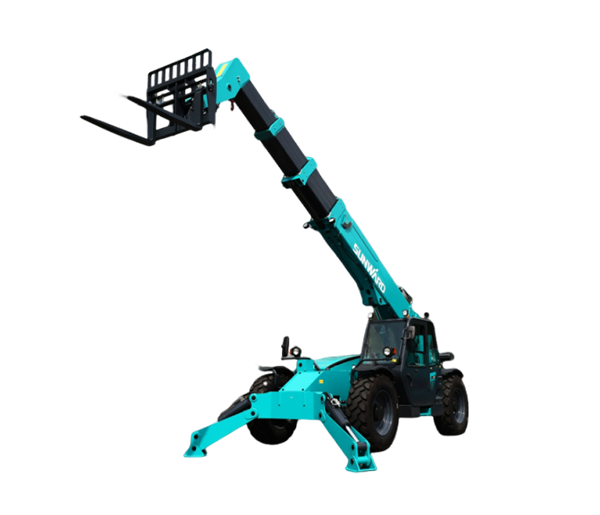
When a normal forklift is not enough, I usually look at a telescopic handler. The reason is simple: a standard forklift is good at moving loads on the ground, but many construction and industrial jobs also require lifting, reaching, placing, and working at different heights. That is where the SWTH4517 SWTH Telescopic Boom Forklift becomes useful.
The SWTH4517 combines the basic job of a forklift with a telescopic boom that can extend forward and lift materials to a much higher position. The published specifications give it a rated bearing capacity of 4,536 kg, a maximum lifting height of 17.06 m, and a maximum boom extension length of 13 m. Its listed machine weight is 15,100 kg, with a traction force of 95 kN in the international product information.
From our side at Ganglong Heavy Industry Technology, we focus on making the purchasing process easier for customers who need construction machinery, mining machinery, agricultural machinery, attachments, and related equipment. We can discuss the required configuration, arrange equipment supply, coordinate inspection and documents, and organize international transportation through our trading team. For Sunward equipment such as the SWTH4517, we supply and arrange the equipment rather than presenting ourselves as the manufacturer of the Sunward brand.
I like to describe the SWTH4517 as a forklift with much longer reach. That sounds simple, but it explains why this machine can be useful on a wide range of job sites.
A telescopic handler uses a boom that can move upward and extend forward. A forklift attachment, such as pallet forks, can be fitted to the front of the boom. The operator can then move the machine close to a load, pick it up, raise it, extend the boom, and place it at a required position.
This working method is especially useful when the load cannot be placed directly in front of the machine. For example, a construction project may require materials to be lifted to an upper floor. A warehouse may need pallets placed at a higher storage location. A farm may need to move materials across uneven ground. An industrial plant may need heavy components positioned at a distance from the machine.
The SWTH4517 is designed around this type of work. Its maximum lifting height is 17.06 m, while the maximum extension length is listed as 13 m. The rated bearing capacity is 4,536 kg. These numbers are important, but I always recommend looking beyond the maximum numbers when choosing a telescopic forklift. The real question is not simply “How high can it lift?” It is “How much can it safely handle at the required height and reach?”
That is why the load chart, attachment, boom position, ground condition, and use of outriggers should all be considered before an order is confirmed. The SWTH4517 brochure provides separate load information for configurations with and without outriggers, which is much more useful for actual planning than looking at one maximum capacity number alone.
| Item | Published Specification |
|---|---|
| Model | SWTH4517 |
| Rated bearing capacity | 4,536 kg |
| Maximum lifting height | 17.06 m |
| Maximum extension length | 13 m |
| Machine weight | 15,100 kg |
| Traction force | 95 kN |
| Engine | Cummins QSF3.8L |
| Engine power | 97 kW in the current English brochure |
| Overall dimensions | 7,340 × 2,560 × 2,540 mm |
| Ground clearance | 457 mm |
Source: Sunward International SWTH4517 product information and SWTH English technical brochure.
The working principle is easier to understand than it may sound. The diesel engine provides the power. The transmission and hydraulic system transfer that power to the wheels and working equipment. The operator controls the machine from the cab, while hydraulic cylinders control the boom and attachment movements.
First, the machine drives toward the load. Depending on the job, the operator can use the fork attachment or another suitable tool. Once the forks are correctly positioned under the pallet or load, the boom raises the load.
After lifting, the operator can extend the telescopic boom. This is the key difference between a traditional forklift and a telescopic handler. Instead of only moving vertically, the SWTH4517 can place the load forward from the machine.
When the machine needs to work at greater height or reach, the operator must consider the load chart and machine position. As the boom extends, the working load changes. This is normal for telescopic equipment and is one reason trained operation matters.
The machine also uses a four-wheel-drive system and offers multiple steering modes. Sunward's SWTH series documentation describes front-wheel steering, four-wheel steering, and crab steering. These modes allow the operator to select a steering method according to the working area.
Four-wheel steering can help when the machine needs a tighter turning path. Crab steering can be useful when the operator needs to move the machine sideways or approach a position from a different angle. On a large construction site, this flexibility can save quite a bit of unnecessary movement.
The SWTH4517 technical material also lists a hydraulic-driven system, four forward and three reverse gears, a maximum travel speed of 32 km/h, and a maximum gradeability of 55%. These figures describe the machine's mobility capability, but actual site performance still depends on terrain, load, tire condition, and operating conditions.
The first reason customers usually look at the SWTH4517 is reach. With a maximum lifting height of 17.06 m and maximum extension length of 13 m, it is intended for jobs where ordinary forklifts have limited working height or forward reach.
This can be useful for construction materials, pallets, industrial components, roofing materials, equipment installation, agricultural materials, and other loads that have to be moved to a higher or farther position.
However, I would never choose a telescopic handler only from its maximum height. The working load at a particular boom angle and extension is much more important. Before we confirm an order, we prefer to understand the customer's actual working requirement first.
The SWTH4517 has a published rated bearing capacity of 4,536 kg. That puts it in a class suitable for substantial material handling work rather than light warehouse duty alone.
The machine can be configured with pallet forks and other attachments depending on the work. The English brochure lists a floating pallet fork as standard equipment and also lists options such as a lifting basket, soft clamp, bucket, lifting hook, pipe grapple, and solid tires.
This attachment flexibility is one of the practical reasons companies consider a telehandler. Instead of buying one machine for every individual task, one machine can potentially handle several types of material movement when the correct attachments are selected.
A large machine does not have to feel difficult to move. The SWTH series is designed with three steering modes: front-wheel steering, four-wheel steering, and crab steering. The system gives the operator different ways to position the machine in changing site conditions.
For a normal road-like movement, front-wheel steering is familiar. In tighter work areas, four-wheel steering can reduce the turning path. Crab steering allows the machine to move at an angle, which can be helpful when approaching a load or working beside a structure.
The SWTH series uses electro-hydraulic proportional control. In simple terms, the operator can control working movements more smoothly rather than relying only on rough on-off movements. The manufacturer's technical information also describes an electrically controlled handle and a hydraulic system designed for practical control.
For an operator who spends many hours moving loads, smooth control matters. It helps reduce sudden movements and makes it easier to place a load where it needs to go.
Fork position is another detail that can make daily operation easier. The SWTH4517 product information lists automatic regulation and balancing of the pallet forks as one of the product features. The brochure also lists an automatic leveling system for the pallet fork.
For pallet handling, this is useful because the operator does not want to spend unnecessary time correcting the fork angle every time the boom position changes.
In my experience with construction equipment purchasing, a machine specification only becomes meaningful when it connects to a real job. So instead of simply listing technical terms, I look at what those features actually mean for the operator.
The SWTH series uses four-wheel drive and is designed for construction, industrial, agricultural, and material-handling environments. Sunward's published SWTH documentation describes the machine as suitable for factories, warehouses, terminals, construction sites, farms, and material yards.
This gives the SWTH4517 a wider working range than a warehouse-only forklift. Of course, it is still necessary to assess the ground before operation. Mud, loose soil, steep slopes, standing water, and uneven surfaces can affect any heavy machine.
The SWTH series includes a frame leveling system, while its technical description highlights the suspension system and front axle leveling. The purpose is practical: help the machine maintain a more suitable working position when the ground is not perfectly flat.
For construction sites, this matters because the ground is rarely as clean and flat as a warehouse floor. Operators may need to cross gravel, compacted soil, ramps, or temporary access roads.
Published SWTH4517 information identifies a hydraulic transmission system, while Sunward's SWTH series documentation describes hydrostatic drive and four-wheel drive. The system is designed to provide controlled travel and working performance without making the machine unnecessarily complicated for the operator.
The current brochure identifies the engine as a Cummins QSF3.8L with 97 kW power and 488 N·m maximum torque. Because specifications can change between markets or production configurations, I recommend confirming the final engine and emission configuration in the quotation before placing an international order.
Telescopic handlers require careful load management because the load position changes as the boom moves. The SWTH4517 brochure includes load charts for both outrigger and non-outrigger working conditions. The manufacturer's SWTH documentation also describes overload-related safety functions on the series.
For us, this is an important purchasing point. We do not recommend choosing a machine only by comparing the headline lifting capacity. We first need to know the load weight, load size, required lifting height, required reach, attachment, ground condition, and working method.
The SWTH4517 belongs to a broader telescopic handler range. Looking at the product family can help buyers understand whether they really need a 17.06 m machine or whether a smaller model could meet the job requirement.
| Model | Rated Capacity | Maximum Lifting Height | Typical Position in Range |
|---|---|---|---|
| SWTH2710 | 2,722 kg | 10.5 m | Lower-capacity telescopic handling |
| SWTH3007 | 3,000 kg | 7 m | Compact material handling |
| SWTH3507 | 3,500 kg | 7.43 m | Mid-range handling |
| SWTH3910 | 4,000 kg | 10.2 m | Higher capacity with moderate reach |
| SWTH3915 | 4,000 kg | 14.46 m | Higher reach handling |
| SWTH4517 | 4,536 kg | 17.06 m | High-capacity, high-reach handling |
Source: Sunward International telescopic handler product listings. The table is intended as a model-range reference; actual configuration and market specifications should be confirmed before purchase.
For a customer who only needs to lift materials 7 or 8 meters high, buying a larger high-reach machine may not make sense. But when the project regularly involves high-level placement and forward reach, the SWTH4517 becomes much more relevant.
Construction is one of the most obvious applications. Materials often need to be moved from ground level to higher working areas. Pallets of blocks, boards, pipes, steel components, insulation materials, roofing materials, and other building supplies may need to be lifted and positioned.
A telescopic boom forklift can approach the load, lift it, and extend the boom toward the required location. This can reduce the need to reposition several pieces of equipment for simple material movement.
Warehouses with outdoor yards or large storage areas can also use telehandlers. The SWTH4517 is not simply a warehouse forklift, but its reach and lifting ability can be useful when materials must be moved around a larger site.
For indoor use, buyers should always check doorway dimensions, floor load limits, turning space, ventilation requirements, and machine height before choosing a large telehandler.
Agricultural operations often involve pallets, feed, hay, bags, equipment, and other materials. A machine with strong reach and off-road mobility can be useful around farms, especially where materials have to be placed on higher platforms or moved across open ground.
Attachment selection becomes important here. A fork attachment may be useful for pallets, while a bucket or grapple can be more suitable for other agricultural materials.
Factories and industrial plants often have heavy components that must be moved into position. The long boom can be useful when the machine cannot drive directly underneath the final placement point.
Examples may include equipment installation, component handling, maintenance support, material yards, and plant construction. The exact attachment and working load should always be matched to the job.
Large material yards need machines that can move quickly between different positions. The SWTH4517's four-wheel drive, steering modes, and high lifting reach can make it suitable for outdoor material handling where flexibility matters.
Again, site planning is important. The machine weighs about 15.1 tonnes, so ground bearing capacity, transport access, and operating space need to be checked before deployment.
High-reach telescopic handlers can also be considered for large equipment installation and infrastructure projects. A published SWTH4517 case from the Russian market described the machine being supplied for a wind-power project where the customer needed to move heavy loads during installation of internal systems and structural components.
This kind of application shows why reach is sometimes just as important as lifting capacity. The machine does not only need to carry a load; it needs to place that load where workers actually need it.
When I handle an international machinery inquiry, I do not think the job ends when the customer says, “Send me the machine.” There are many small details between an order and successful delivery.
For the SWTH4517, the first step is to confirm the actual application. I normally want to know the maximum load, working height, working reach, attachment type, terrain, climate, working hours, destination country, and required emission standard.
We then confirm the machine configuration and commercial terms. If attachments are required, they should be listed clearly rather than added as an afterthought. Common attachment options shown in SWTH4517 materials include pallet forks, lifting baskets, soft clamps, buckets, lifting hooks, pipe grapples, and other equipment depending on the required configuration.
| Order Stage | What We Usually Check |
|---|---|
| Requirement confirmation | Load, height, reach, attachment, site, destination |
| Configuration | Machine model, engine, steering, tires, attachments and options |
| Order confirmation | Price, production schedule, payment terms and shipping plan |
| Pre-shipment inspection | Appearance, engine, hydraulic system, boom, forks, controls and basic operation |
| Documents | Manuals, spare-parts information, inspection records and required shipping documents |
| Packing and loading | Protection, fixing, loose parts packing and container/vessel arrangements |
| International transportation | Sea freight for complete machines, air or express options for suitable spare parts |
| After-delivery support | Technical communication, spare-parts coordination and service follow-up |
Our general commercial process normally uses T/T payment, with a deposit before production and the balance before shipment, subject to the specific quotation and contract. Production time depends on model, configuration, order quantity, and customization requirements, so we confirm the delivery schedule before production rather than giving an unrealistic fixed number.
Before shipment, we check the machine's appearance, engine and hydraulic systems, lifting and loading functions, electrical system, and basic operating performance. Standard accessories, operation manuals, spare parts, and required documents are prepared according to the order.
For transportation, complete machines are generally shipped by sea. Spare parts and accessories can often be arranged by air or express when appropriate. The machine is protected with film, securely fixed, and packed according to the transportation method, while loose components can be separately packed in cartons or wooden cases.
There is a big difference between buying a machine and arranging a complete machinery supply process. For an international buyer, the machine itself is only one part of the job.
Ganglong Heavy Industry Technology (Hefei) Co., Ltd. was founded in 2013. Together with Hefei Ganglong International Trade Co., Ltd., we work across construction machinery, mining machinery, agricultural machinery, attachments, equipment supply, and international trade.
We also operate with a multi-brand supply model. Alongside our self-branded HKLOONG Excavators, loaders, Backhoe loaders, and swamp excavators, we provide machine sales and leasing services involving domestic and international brands such as Hitachi, SANY, Lonking, Hyundai, XCMG, SHANMON, and LOVOL.
This means we are used to dealing with different machine categories and different customer requirements. A customer may come to us looking for a telescopic handler, but the actual project may also need an Excavator, loader, attachment, generator, agricultural machine, or other supporting equipment. We can discuss the complete requirement instead of looking at one machine in isolation.
Our international trade team has experience serving customers across Asia, Africa, America, and other regions. That experience matters because international machinery orders involve more than product specifications. Shipping documents, port arrangements, spare parts, payment terms, packaging, inspection, and communication all affect the final result.
For the SWTH4517 specifically, we can help customers compare the machine's lifting height and capacity with their actual working conditions, confirm attachment requirements, coordinate equipment inspection, and arrange transportation based on the destination.
One point I always tell customers is this: if the machine will be used for a specific lifting job, send us the load information and working height before asking only for a price. A cheaper machine that cannot perform the required task is not really a saving.
The SWTH4517 is a telescopic handler, also called a telehandler or telescopic boom forklift. It combines a lifting fork with an extendable boom, allowing materials to be lifted and placed at greater heights and distances than a conventional forklift.
The published rated bearing capacity is 4,536 kg. Actual allowable load depends on boom position, lifting height, extension, attachment, and working configuration, so the relevant load chart should always be checked for the specific operation.
The maximum published lifting height is 17.06 m. The maximum lifting height should not be confused with the maximum safe capacity at that height. The load chart should be used when planning actual lifting work.
The published maximum extension length is 13 m. Actual working reach depends on boom angle and load condition.
The current English technical material identifies a Cummins QSF3.8L engine with 97 kW power and 488 N·m maximum torque. Because engine and emission configurations can vary by market and production version, we recommend confirming the final configuration in the quotation.
The published SWTH4517 brochure lists a floating pallet fork and optional equipment including a lifting basket, soft clamp, bucket, lifting hook, pipe grapple, and solid tire configuration. Attachment availability should be confirmed according to the machine configuration and intended application.
The SWTH series is designed for outdoor working conditions and includes four-wheel drive, multiple steering modes, and frame leveling functions. However, no heavy machine should be treated as suitable for every terrain. Ground strength, slope, weather, load, and working area must be checked before operation.
Yes. Telescopic handlers are commonly used for material handling on construction sites, and Sunward describes its SWTH series as suitable for construction, industry, agriculture, factories, warehouses, terminals, and material yards.
Yes. Hefei Ganglong International Trade Co., Ltd. serves as our international trade arm. We can coordinate the commercial process, inspection, documents, packing, and transportation for overseas machinery orders according to the agreed project requirements.
I would start with the actual job rather than the machine name. Tell us the maximum load, lifting height, forward reach, attachment, terrain, and working environment. We can then compare the available SWTH models and determine which specification matches the job. A smaller machine may be enough for lower lifting work, while the SWTH4517 is designed for higher reach and heavier handling requirements.
The SWTH4517 SWTH Telescopic Boom Forklift is built around a very practical idea: one machine should be able to move, lift, reach, and position materials across demanding working areas.
Its published 4,536 kg rated bearing capacity, 17.06 m maximum lifting height, 13 m maximum extension length, four-wheel drive, three steering modes, hydraulic working system, and attachment flexibility make it a serious option for construction, industrial material handling, agriculture, logistics yards, infrastructure work, and other outdoor applications.
But I would not choose the SWTH4517 simply because the numbers look large. The right machine is the one that matches the actual load, height, reach, attachment, terrain, and working cycle. That is where our role at Ganglong becomes useful.
We can help turn the project requirement into a practical equipment configuration, arrange the machine supply, check the equipment before shipment, prepare the required documents, and coordinate international transportation. If you are sourcing a SWTH4517 telescopic handler, telescopic forklift, telehandler, or related construction machinery, send us your required lifting capacity, working height, destination, and attachment needs. We can start from the job itself and work backward to the machine configuration.
Product keywords: SWTH4517 SWTH Telescopic Boom Forklift, SWTH4517 telescopic handler, SWTH4517 telehandler, telescopic boom forklift, telescopic forklift, high reach telehandler, construction telehandler, material handling machine, heavy duty telescopic handler, telescopic forklift supplier, construction machinery supplier, industrial material handling equipment.
Technical information source: Sunward International SWTH4517 product page and Sunward SWTH4517 English technical brochure. Specifications may vary by market, configuration, production version, and applicable regulations. Final specifications should be confirmed before ordering.
info@hkloong.com
86 158 5511 9567


©2026 HKLOONG Heavy Industry Technology (Hefei) Co., Ltd. All Rights Reserved.

This website uses cookies to ensure you get the best experience on our website.
 Español
 Pусский
 Français
 العربية
 WhatsApp
 Phone
Phone E-mail
 Message