
 Español
 Pусский
 Français
 العربية

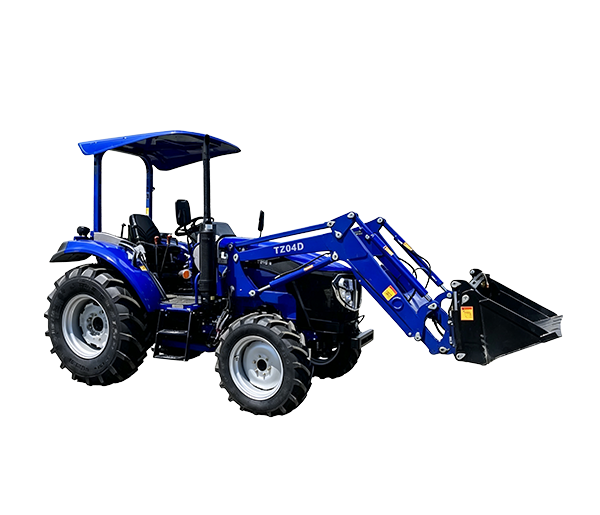
When I look at a farm tractor, I do not judge it by horsepower alone. I look at how well the tractor works with different implements, how easily the operator can control it, how it handles changing field conditions, and how practical it is for daily farm work. That is why I see the TB SERIES 40-75HP Platform Tractor as a practical solution for farms that need useful power without moving into a much larger tractor class.
The TB SERIES covers a useful power range for many agricultural jobs, from soil preparation and cultivation to transport, mowing, planting, material handling, and general farm maintenance. Depending on the configuration, I can match the tractor with different tires, transmission layouts, four-wheel drive systems, rear implements, and operator protection options.
At HKLOONG Heavy Industry Technology (Hefei) Co., Ltd., I focus on equipment development, precision manufacturing, quality testing, customized modification, and global distribution. My approach to agricultural machinery is straightforward: the tractor needs to make sense in the real working environment. It should be strong enough for the job, simple enough to operate, and practical enough to maintain.
1. What Is the TB SERIES 40-75HP Platform Tractor?
The TB SERIES 40-75HP Platform Tractor is a medium-power agricultural tractor platform designed for farms, agricultural contractors, land maintenance teams, and other users who need a flexible machine for daily field operations. The platform covers several power levels, allowing me to choose a configuration based on the size of the farm, the implement being used, soil conditions, and transport requirements.
In this power class, I normally expect the tractor to do much more than simply pull a trailer. A properly configured farm tractor should be able to work with a rotary tiller, plow, harrow, mower, seeder, fertilizer spreader, trailer, cultivator, and other three-point-mounted equipment. This is where the platform design becomes important.
The TB family is also interesting because published third-party TB Series documentation lists models ranging from TB404 and TB454 through TB504, TB554, TB604, TB704, and TB754. The documented rated power range is approximately 40 to 75 HP for the models relevant to this product positioning. :contentReference[oaicite:1]{index=1}
For me, this range offers a useful balance. A 40HP-class tractor can suit lighter cultivation, mowing, transport, orchard work, and general maintenance. As power increases toward 60–75HP, the tractor becomes more suitable for heavier soil preparation, larger implements, demanding PTO work, and higher daily workloads.
I also pay attention to the fact that farms are rarely limited to one task. A tractor may spend the morning pulling a cultivator, move materials in the afternoon, and then operate a mower the next day. A good platform should therefore be flexible instead of being designed around one narrow application.
2. How I Understand the Working Principle of the TB Tractor
The basic working principle is simple. The diesel engine produces mechanical power. The transmission controls how that power reaches the wheels. The final drive transfers torque to the wheels, while the hydraulic system controls compatible implements and lifting equipment. The PTO transfers rotating power from the tractor to powered implements.
When I operate the tractor in the field, I first select a suitable gear and working speed. The transmission allows me to match engine output with the job. For example, soil preparation normally requires strong pulling force at a controlled ground speed, while transport requires a different speed and power balance.
The three-point linkage is another important part of the system. It allows me to attach and control rear-mounted implements. When the implement is lifted, lowered, or adjusted, the hydraulic system provides the required movement. This makes the tractor more useful because one basic power unit can work with many different tools.
The PTO is equally important. Instead of only pulling an implement, the tractor can supply rotary power to equipment such as rotary tillers, mowers, balers, pumps, and other PTO-driven machines. This is one reason I consider the PTO system when matching a tractor to a farm's actual workload.
Four-wheel drive can also make a major difference. When I work on wet soil, slopes, soft ground, or uneven fields, additional traction can help reduce wheel slip and improve control. Public TB Series documentation describes four-wheel-drive configurations and a front axle designed for demanding and wet agricultural environments. :contentReference[oaicite:2]{index=2}
3. Main Features I Look For in a 40-75HP Farm Tractor
Useful power range
The biggest advantage of the TB platform is its power range. I can select a smaller 40–50HP configuration when the work mainly involves mowing, light cultivation, transport, orchard maintenance, or general farm duties. For heavier work, I would move toward the 55–75HP range, where additional engine power can support larger implements and tougher soil conditions.
Diesel engine design
A diesel engine is a natural choice for this type of machine because agricultural work often involves long operating hours and variable loads. I look for stable torque delivery, reasonable fuel consumption, simple service access, and a power curve that works well with the transmission and PTO system.
Published TB Series information describes four-cylinder diesel engines and reports fuel consumption around 245 g/kWh for the referenced range. The same documentation lists torque figures from approximately 155 to 245 N·m depending on model. These figures are useful industry references rather than HKLOONG specifications. :contentReference[oaicite:3]{index=3}
Flexible transmission
Transmission choice directly affects how comfortable and productive the tractor feels. Public TB Series material lists an 8-forward/8-reverse synchronized configuration as standard on the referenced third-generation range, with other transmission configurations available depending on model and market. :contentReference[oaicite:4]{index=4}
For me, the important point is not simply the number of gears. What matters is whether the available ratios give the operator enough control for field speed, transport, reversing, and implement operation.
Four-wheel drive
For farms working on wet, muddy, sloped, or uneven ground, I consider 4WD a practical feature rather than an optional luxury. Better traction can help the tractor transfer engine power to the ground more effectively, especially when pulling implements or working in soft soil.
Different tire choices
I would not use the same tire for every application. Agricultural tires can be selected for farmland, grass areas, wet fields, or other working environments. TB Series reference documentation lists farmland, grass, and engineering tire options, while another published TB brochure lists paddy-land, OTR, and meadow tire choices. :contentReference[oaicite:5]{index=5}
Operator protection and comfort
Long working hours make the operator station important. A platform tractor can be configured around an open operating station with ROPS protection or a more enclosed cab arrangement depending on the machine specification and market requirements. I also pay attention to control layout, pedal position, seat adjustment, visibility, and ease of access because these details affect the working day just as much as engine power.
4. TB SERIES 40-75HP Specification Reference and Comparison
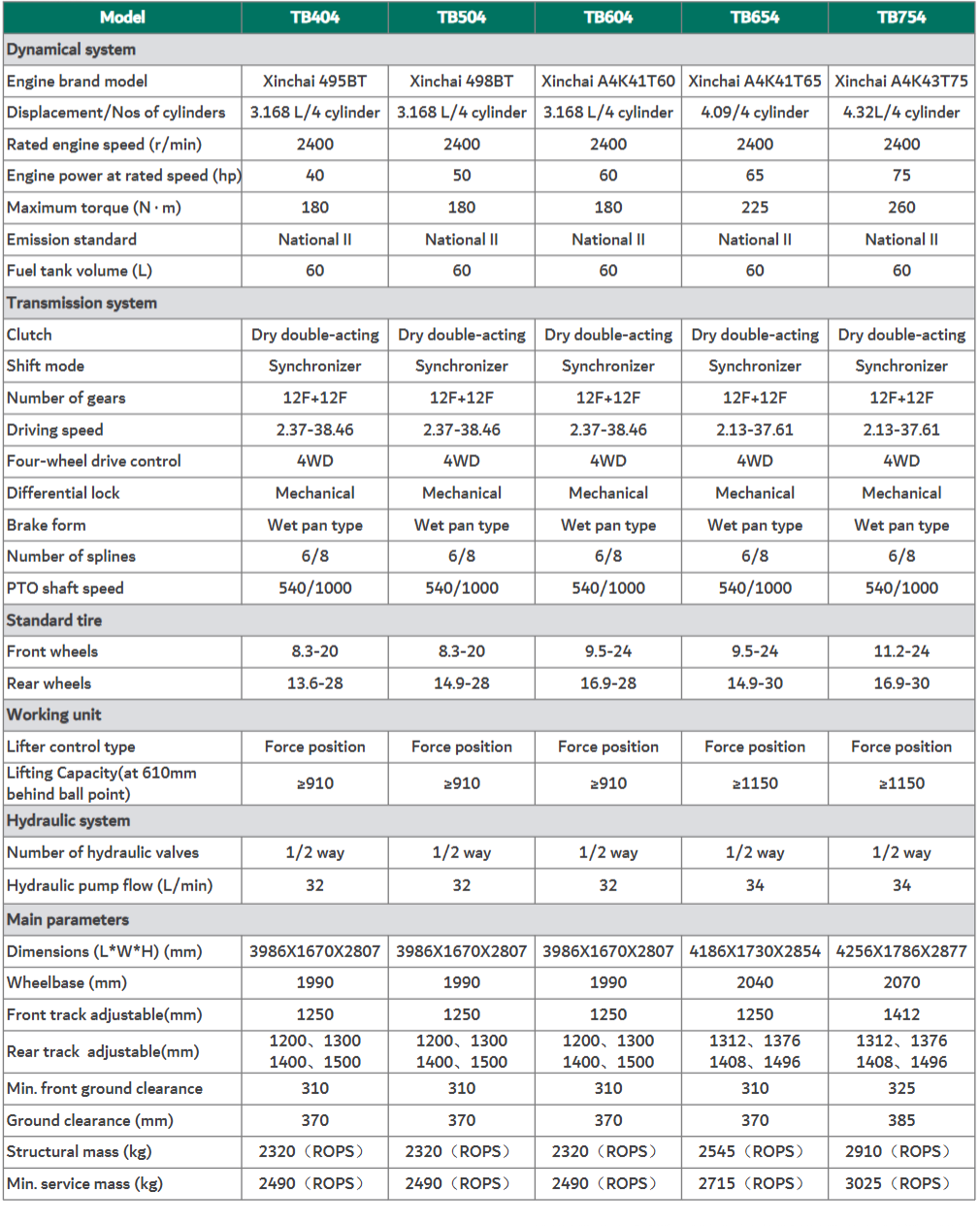
When I compare tractors in this category, I prefer to look at several specifications together instead of focusing on one number. The following table uses publicly available TB Series reference information. It is provided for technical comparison and product positioning only; it should not be treated as an official HKLOONG specification sheet.
| Reference Model | Rated Power | Engine Reference | Typical Position |
|---|---|---|---|
| TB404 | 40 HP / 29.4 kW | C490 | General farm and light-medium field work |
| TB454 | 45 HP / 33.1 kW | A495 | Cultivation, mowing and transport |
| TB504 | 50 HP / 36.8 kW | A498 | General-purpose agricultural work |
| TB554 | 55 HP / 40.4 kW | A4K41T | Medium-duty field operations |
| TB604 | 60 HP / 44 kW | A4K41T | Heavier cultivation and transport |
| TB704 | 70 HP / 51.5 kW | A4K43T | Heavy field and implement work |
| TB754 | 75 HP / 55 kW | A4K43T | Higher-demand agricultural work |
Source: Published TB Series tractor specifications from CAMCO and a TB 3rd Generation product brochure. Figures are industry reference data and are not presented as HKLOONG-certified specifications. :contentReference[oaicite:6]{index=6}
This range also shows why I would not automatically choose the highest horsepower. If the farm mainly performs mowing, orchard maintenance, light cultivation, and short-distance transport, a smaller model may be easier to manage. If the tractor regularly pulls heavy tillage equipment, operates large PTO implements, or works long hours in difficult soil, a higher-power configuration can make more sense.
5. How the TB Tractor Compares with Other Tractors in This Power Class
I also compare the platform with tractors from established global manufacturers because buyers need a realistic reference point. The following information is taken from manufacturer-published material. It is not intended to suggest that the products have identical configurations or that the specifications are directly interchangeable.
| Tractor Reference | Power Range / Model | Transmission Reference | Hitch / Implement Focus |
|---|---|---|---|
| TB Series | 40–75 HP range | 8F+8R reference; other options available | Three-point implements and PTO agricultural work |
| Massey Ferguson MF 4707 | 75 HP max engine power | 12F/12R Power-Shuttle or Dyna-2 options | Utility farming, loader and three-point implement work |
| Massey Ferguson MF 3SP.75 | 75 HP | 24F/24R synchro shuttle; optional power shuttle | Specialty farming and implement operation |
| Kubota L4802N | 48.4 HP | 8F+8R gear drive | Compact narrow agricultural applications |
Sources: Massey Ferguson official MF 4700, MF 3 Specialty, and Kubota Compact Narrow Series product information. Specifications shown are third-party reference data and are not HKLOONG specifications. :contentReference[oaicite:7]{index=7}
What I take from this comparison is that the 40–75HP tractor market covers several different needs. Some tractors focus on specialty crops and narrow spaces, while others are built as general utility tractors. The right machine depends on the implement, field condition, required traction, transport needs, and operator preference.
6. Where I Would Use the TB SERIES 40-75HP Platform Tractor
Crop cultivation
I would use a 40–75HP tractor for soil preparation, cultivation, harrowing, seedbed preparation, and related field work. The exact horsepower should be matched with the implement size and soil resistance. Heavier soil and deeper tillage normally demand more pulling power.
Planting and seeding
For planting work, controlled ground speed and implement compatibility are important. I would select the transmission ratio based on the required planting speed and use a suitable three-point-mounted or trailed implement.
Mowing and grass maintenance
For farms, roadside maintenance, pasture management, and grass cutting, the tractor can work with suitable rotary or finishing mowers. In these applications, PTO performance and maneuverability are often more important than simply having the highest engine output.
Orchard and specialty farming
Where the available space is limited, I pay close attention to tractor width, turning radius, tire selection, and visibility. A properly configured mid-power tractor can provide enough pulling force while remaining easier to move around the working area.
Material handling and farm transport
Farm work often includes moving feed, fertilizer, harvested crops, tools, and other materials. With suitable attachments and a trailer, the tractor can become a useful transport and handling machine. I always recommend matching the load, trailer, braking system, and road-use requirements to local regulations.
Livestock farms
Livestock operations need tractors for cleaning, feed handling, mowing, material transport, and land maintenance. A versatile platform can reduce the need for separate machines for every task.
| Application | Suggested Power Direction | Important Factors I Check |
|---|---|---|
| Mowing | 40–60 HP | PTO, tire selection, maneuverability |
| Orchard work | 40–60 HP | Overall width, turning radius, visibility |
| General cultivation | 45–65 HP | Traction, transmission, implement size |
| Heavy tillage | 60–75 HP | Drawbar pull, 4WD, ballast, implement demand |
| Farm transport | 40–75 HP | Transmission, brakes, trailer compatibility |
| Material handling | 50–75 HP | Hydraulics, front attachment, stability |
Application guidance: This is practical selection guidance rather than manufacturer-certified capacity data. Actual tractor and implement matching should be confirmed from the final machine specification and implement manufacturer requirements.
7. How I Approach Manufacturing, Quality Control and Customization
When I manufacture or configure agricultural machinery, I do not treat the engine as the whole tractor. A tractor is a complete working system. Engine output, transmission, axle, hydraulic components, frame, steering, braking, PTO, electrical system, tires, and operator station all need to work together.
My manufacturing approach starts with structural requirements. The main frame and load-bearing components need appropriate material selection, machining, welding, and inspection. Components that carry repeated loads deserve particular attention because agricultural machines often work for long hours on uneven ground.
I also focus on the transmission and axle assembly. Gear engagement needs to be stable, controls need to be practical, and the drivetrain needs to transfer engine torque without unnecessary loss. For 4WD configurations, I pay close attention to axle alignment, steering movement, sealing, lubrication, and protection from water, mud, and dust.
The hydraulic system is another area where I look for consistency. Hydraulic oil cleanliness, hose routing, connection quality, valve operation, and cylinder performance can all affect daily reliability. A small hydraulic problem can stop an entire working operation, so serviceability matters.
Electrical protection is also important in agricultural environments. Mud, rain, fertilizer dust, moisture, and temperature changes can create difficult conditions for connectors and wiring. Published TB Series third-generation documentation specifically describes sealed electrical wiring and connectors for humid and rainy environments, showing why environmental protection is a practical consideration in this tractor class. :contentReference[oaicite:8]{index=8}
At HKLOONG, my wider manufacturing capability includes equipment R&D, precision manufacturing, quality testing, customized modification, and global distribution. For agricultural machinery projects, I use this engineering approach to consider the complete working environment instead of treating the tractor as a single standard machine.
8. Why I Choose a Practical TB SERIES Tractor Configuration
When I select a tractor for a real project, I start with the work rather than the brochure. I ask what implement will be used, how many hours the tractor will operate each day, whether the land is flat or uneven, whether the soil becomes wet, how much transport work is required, and what service resources are available locally.
For a smaller farm, a 40–50HP configuration can provide a useful combination of size and working ability. For a mixed farm with heavier cultivation and transport, 55–60HP may offer a more comfortable operating range. For demanding field work, a 70–75HP configuration provides more engine output for larger implements and heavier workloads.
I also consider the total ownership picture. Fuel use matters, but so do maintenance access, spare parts, tire availability, implement compatibility, operator training, and service support. A tractor that is powerful but difficult to maintain may not be the right machine for a remote farm.
That is why I position the TB SERIES 40-75HP Platform Tractor around flexibility. The platform can be considered for different farming scales and working conditions, while configuration choices allow the tractor to be adapted to specific requirements.
For overseas projects, I also understand that agricultural machinery may need to meet different market requirements. Engine emission rules, safety requirements, road regulations, tire standards, PTO configurations, operator protection, and local service conditions can vary. Before final production, I recommend confirming the target country and application so the final configuration can be matched correctly.
9. FAQ About the TB SERIES 40-75HP Platform Tractor
What is the TB SERIES 40-75HP Platform Tractor used for?
I would use it for general agricultural work such as cultivation, mowing, planting, transport, material handling, orchard maintenance, livestock farm operations, and PTO-driven implement work. The correct model depends on the implement and working conditions.
How do I choose between 40HP and 75HP?
I start with the implement requirement. For lighter mowing, transport, and general farm work, a 40–50HP tractor may be enough. For heavier cultivation, larger implements, and demanding PTO applications, I would consider 60–75HP. The final choice should be based on the implement manufacturer's power requirement and actual field conditions.
Is 4WD important for agricultural work?
It can be very useful when working on wet, muddy, sloped, loose, or uneven ground. Four-wheel drive can improve traction and reduce wheel slip. However, I would still match the tractor configuration to the actual farm environment rather than selecting 4WD automatically for every application.
Can the tractor work with different agricultural implements?
Yes, a platform tractor in this class is normally designed around implement compatibility through systems such as the rear three-point linkage and PTO. Before connecting an implement, I check its required horsepower, hitch category, PTO speed, hydraulic demand, weight, and operating conditions.
What tires should I use?
I choose tires according to the ground. Agricultural field tires are suitable for general farming, while specialized tire patterns may be more appropriate for wet fields, grass areas, or other terrain. Tire size and load rating should also match the final tractor configuration.
Can the TB SERIES tractor be customized?
Configuration possibilities depend on the final model and target market. I can evaluate requirements such as tires, operator protection, transmission configuration, working environment, implement compatibility, and other project-specific needs before confirming a final specification.
What should I confirm before ordering a 40-75HP tractor?
I recommend confirming the target application, required horsepower, implement type, PTO requirement, transmission, 2WD or 4WD configuration, tire type, operator station, emission requirement, road-use requirements, local climate, and service conditions. These details help prevent a mismatch between the tractor and the actual job.
Final Thoughts
For me, a useful agricultural tractor is not simply a machine with a large engine. It is a working platform that can connect power, traction, hydraulics, PTO output, implements, and operator control into one practical system.
The TB SERIES 40-75HP Platform Tractor covers a useful range for farms that need flexibility across cultivation, mowing, planting, transport, material handling, orchard work, and general land management. With different power levels and configuration choices, I can approach different workloads without forcing every customer into the same tractor specification.



 WhatsApp
 Phone
Phone E-mail
 Message