
 Español
 Pусский
 Français
 العربية


When I choose an agricultural tractor for serious daily work, I look beyond the horsepower number. A tractor needs to pull, lift, drive, turn, work with different implements, and keep operating when the field conditions are less than perfect. That is how I look at the TH SERIES 75-90HP Platform Tractor.
This tractor class sits in a useful part of the agricultural machinery market. With 75 to 90 horsepower available across the range, I can use it for field cultivation, plowing, rotary tillage, planting, transport, mowing, material handling, livestock work, orchard operations, and many other farm tasks. It is powerful enough for demanding jobs while remaining practical for farms that do not need a very large tractor.
At HKLOONG Heavy Industry Technology (Hefei) Co., Ltd., I approach agricultural machinery from an engineering and application point of view. My company focuses on equipment R&D, precision manufacturing, quality testing, customized modification, and global distribution. For me, the goal is not simply to put a large engine into a tractor. I want the engine, transmission, axle, hydraulic system, PTO, tires, operator station, and working implements to function as one useful machine.
1. What Is the TH SERIES 75-90HP Platform Tractor?
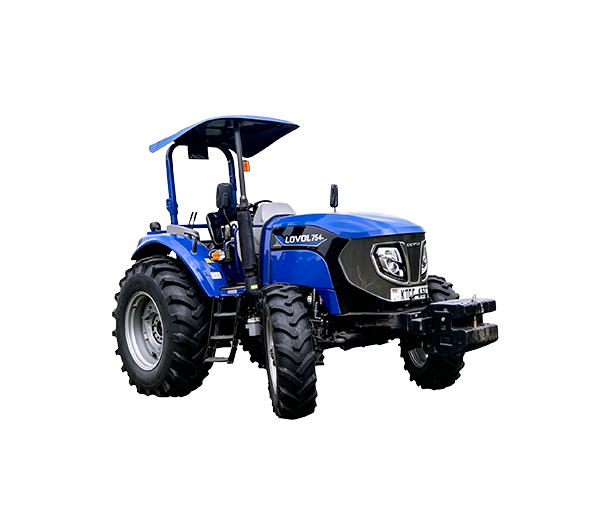
The TH SERIES 75-90HP Platform Tractor is a medium-to-high power agricultural tractor platform designed for farms and agricultural businesses that need more pulling and implement capacity than a compact 40-60HP tractor can normally provide.
The 75-90HP range is useful because it covers many common professional farming requirements. I can think of it as a bridge between smaller utility tractors and much larger field tractors. It has enough engine output for heavier cultivation and PTO work, but it can still be used for everyday transport, mowing, farm maintenance, and general material handling.
Public TH Series information identifies the TH754, TH854, and TH904 as 75HP, 85HP, and 90HP tractors respectively. Published specifications also show four-cylinder diesel engine configurations, 12 forward and 12 reverse gears, mechanical 4WD engagement, wet multi-disc brakes, and multiple PTO options on the referenced models. These figures are useful industry references, not HKLOONG-certified specifications. :contentReference[oaicite:0]{index=0}
From my perspective, the three power levels make sense for different workloads. A 75HP tractor can handle many general farm jobs, while an 85HP tractor gives me more reserve when the soil becomes harder or the implement becomes larger. A 90HP configuration is useful when I need stronger traction, heavier tillage capability, or more power for demanding PTO-driven equipment.
I also see this tractor class as a multi-purpose machine rather than a single-job tractor. During one season, the same machine may plow fields, pull a trailer, operate a rotary tiller, mow grass, move materials, and work around a livestock operation. That versatility is one of the main reasons I consider the 75-90HP range practical for modern agricultural operations.
2. How I Understand the Working Principle of a 75-90HP Farm Tractor
The working principle of the tractor is straightforward. The diesel engine generates power and torque. The transmission controls how that power reaches the wheels. The axles transfer torque to the tires. The hydraulic system operates compatible equipment and the rear three-point linkage. The PTO sends rotary power to powered implements.
When I am working in the field, I select a gear according to the job. Heavy plowing normally needs lower travel speed and strong pulling force. Transport work needs a different gear and speed. Mowing and rotary tillage depend heavily on maintaining a suitable PTO speed while keeping the tractor moving at a controlled ground speed.
This is why I do not judge a tractor simply by engine horsepower. The transmission and final drive determine how effectively that power becomes usable traction. A 90HP engine is not particularly useful if the tractor cannot transfer its power efficiently to the ground.
The three-point hydraulic system is another major part of the working system. I can connect compatible implements to the rear linkage, raise them when turning, lower them into working position, and adjust their operating depth. Depending on the implement, hydraulic outlets can also be used for cylinders, valves, and other functions.
The PTO provides another layer of flexibility. Instead of only pulling an implement, the tractor can supply mechanical rotation to equipment such as rotary tillers, mowers, balers, pumps, and other PTO-driven machines.
Four-wheel drive becomes particularly useful when I work on soft soil, slopes, muddy fields, or uneven ground. It helps transfer engine torque through all four wheels rather than relying only on the rear axle. Published TH Series specifications describe mechanical 4WD engagement and mechanical differential locking on the referenced range. :contentReference[oaicite:1]{index=1}
3. Main Features I Look for in the TH SERIES 75-90HP Tractor
Four-cylinder diesel power
A four-cylinder diesel engine is a common configuration in this tractor class because it can provide a useful balance between torque, fuel use, engine size, and serviceability. Public TH Series information lists four-cylinder engines for the TH754, TH854, and TH904, with rated engine speed of 2,400 rpm in the referenced specification. :contentReference[oaicite:2]{index=2}
For me, torque matters almost as much as horsepower. When a tractor enters heavy soil, the engine needs enough torque reserve to maintain useful pulling performance without constantly operating at its limit. The published TH Series reference figures show maximum torque increasing from about 280 Nm on the 75HP model to 340 Nm on the 85HP model and 360 Nm on the 90HP model. :contentReference[oaicite:3]{index=3}
12F+12R transmission
I like having enough gear choices because farming rarely happens at one fixed speed. The referenced TH Series uses a 12-forward/12-reverse synchronized transmission. This provides a practical spread of speeds for field work, transport, and reversing. :contentReference[oaicite:4]{index=4}
For a tractor operator, smooth gear selection matters. It reduces unnecessary shifting effort and makes it easier to keep the tractor working at the speed required by the implement.
Four-wheel drive and traction
When I am dealing with wet fields or heavy soil, traction becomes one of the first things I check. Four-wheel drive, appropriate tire selection, correct ballast, axle design, and weight distribution all influence how effectively the tractor can use its engine power.
Published TH Series material describes a reinforced structure, longer wheelbase, larger tires, and increased front and rear counterweights as part of the platform's traction-oriented design. :contentReference[oaicite:5]{index=5}
Hydraulic lifting system
The hydraulic system determines how well the tractor works with mounted implements. A high-capacity hydraulic system is useful when the implement is heavy or when several hydraulic functions need to operate during the same task.
For the referenced TH Series, published information reports hydraulic output around 50 L/min and a maximum lifting force of up to 24 kN under the stated measurement condition. Again, I treat these figures as third-party reference data rather than HKLOONG specifications. :contentReference[oaicite:6]{index=6}
PTO flexibility
PTO speed needs to match the implement. The referenced TH Series specifications list a six-spline PTO with 540 rpm and an optional 540/1000 rpm configuration. :contentReference[oaicite:7]{index=7}
When I select a tractor for a particular farm, I always confirm the PTO requirements before finalizing the configuration. An implement that requires a different PTO speed cannot simply be connected and operated without checking compatibility.
Large agricultural tires
Tires are easy to overlook, but they have a direct effect on traction, ground pressure, ride quality, and field performance. The published TH754 reference specification lists 12.4-24 front tires and 18.4-30 rear tires. :contentReference[oaicite:8]{index=8}
For muddy or soft ground, the tread pattern and tire pressure matter as much as the tire dimensions. I therefore treat tire selection as part of the tractor configuration rather than an afterthought.
4. TH SERIES 75-90HP Tractor Specification Comparison
To understand the differences within this power range, I find it useful to compare the three main TH Series reference models side by side. The following data come from publicly available TH Series technical information. They are included for product research and market comparison and should not be interpreted as HKLOONG production specifications.
| Reference Model | Rated Power | Cylinders | Max. Torque | Rated Speed | Transmission |
|---|---|---|---|---|---|
| TH754 | 75 HP | 4 | 280 Nm | 2,400 rpm | 12F + 12R |
| TH854 | 85 HP | 4 | 340 Nm | 2,400 rpm | 12F + 12R |
| TH904 | 90 HP | 4 | 360 Nm | 2,400 rpm | 12F + 12R |
Source: LOVOL TH Series published technical parameters. These figures describe the referenced TH754, TH854 and TH904 products and are not claimed as HKLOONG specifications. :contentReference[oaicite:9]{index=9}
When I read this table, I do not simply say that 90HP is better than 75HP. Instead, I ask what the farm actually needs. If the implement requirement is modest, a 75HP tractor may provide enough power. If the farm regularly uses heavier tillage equipment, a higher-power model can provide more working reserve.
This is an important point when buying agricultural machinery. More horsepower normally means more capability, but it can also mean greater purchase cost, fuel consumption, machine weight, and implement requirements. The right tractor is the one that matches the actual workload.
5. How I Compare the TH Platform with Other 75-90HP Tractors
I also look at comparable tractors from established manufacturers to understand what buyers can expect from this market segment. This gives me a more realistic picture of transmission options, PTO systems, hydraulic capacity, and three-point hitch design.
| Tractor Reference | Power | Transmission Reference | 4WD | Rear Hitch Reference |
|---|---|---|---|---|
| TH754 | 75 HP | 12F + 12R synchronized | Yes | Heavy agricultural implement work |
| TH854 | 85 HP | 12F + 12R synchronized | Yes | Heavy agricultural implement work |
| TH904 | 90 HP | 12F + 12R synchronized | Yes | Heavy agricultural implement work |
| Yanmar Solis 75 | 75 HP | 12F + 12R synchromesh | Yes | Category II, 2,500 kgf reference lift |
| Yanmar Solis 90 | 90 HP | 12F + 12R synchromesh | Yes | Category II, 3,000 kgf reference lift |
| Massey Ferguson MF 4707 | 75 HP max | 12F + 12R Power-Shuttle | Available | Utility three-point implement work |
Sources: LOVOL TH Series, Yanmar Solis 75/90, and Massey Ferguson MF 4700 published manufacturer information. These are independent industry reference products, not HKLOONG specifications. :contentReference[oaicite:10]{index=10}
The comparison shows that the 75-90HP Agricultural Tractor category has several different design approaches. Yanmar's Solis 75/90, for example, uses 12F+12R synchromesh transmission, 4WD, Category II rear linkage, and 540/750 PTO speed references. :contentReference[oaicite:11]{index=11}
Massey Ferguson's MF 4700 platform also demonstrates why transmission choice matters. The MF 4707 is rated at 75HP maximum engine power and offers 12F+12R Power-Shuttle transmission, while the MF 4709 reaches 95HP maximum engine power. :contentReference[oaicite:12]{index=12}
For me, these comparisons are useful because they show that buyers should examine the whole tractor rather than comparing horsepower alone.
6. Where I Would Use a TH SERIES 75-90HP Platform Tractor
Open-field cultivation
Open-field work is one of the clearest applications for this tractor class. I would use a 75-90HP tractor for plowing, disc harrowing, rotary tillage, soil preparation, and similar operations where strong traction and steady engine output are required.
The actual implement size should always be matched to soil conditions, working depth, terrain, and tractor capability. Hard clay soil, wet ground, and deep tillage can demand much more pulling force than light sandy soil.
Planting and seeding
Planting requires controlled speed and stable operation. I would select the transmission ratio according to the planting equipment and desired working speed. The tractor should also provide enough hydraulic and three-point capacity for the selected planter or seeder.
Rotary tillage and PTO work
A PTO-driven rotary tiller places a different type of load on the tractor because the engine must supply both forward movement and rotary power. This is where I pay close attention to PTO speed, engine torque, soil resistance, and implement width.
Transport and farm logistics
Farms move many things: harvested crops, fertilizer, feed, tools, water tanks, and other materials. A 75-90HP tractor can serve as a farm transport machine when properly matched with a suitable trailer and braking system.
For public-road transport, I would always check local registration, lighting, braking, speed, trailer, and operator requirements before operation.
Livestock farming
Livestock farms often need a tractor for several smaller jobs rather than one major field operation. Mowing grass, moving feed, handling bedding material, pulling trailers, maintaining pasture, and operating PTO equipment are common examples.
Orchard and specialty agriculture
Some orchard operations need substantial power but also require careful attention to tractor dimensions and maneuverability. Before selecting a configuration, I would check row spacing, tree height, turning space, terrain, and the type of implement being used.
Land and property maintenance
Outside traditional crop production, a 75-90HP tractor can support large properties, municipal land maintenance, agricultural contractors, estates, and similar operations. Mowing, grading, transport, brush management, and material handling can all be considered when the appropriate attachments are available.
| Application | Why I Would Use This Tractor Class | Key Selection Point |
|---|---|---|
| Heavy cultivation | Strong pulling capability | Traction and implement size |
| Rotary tillage | Useful engine and PTO power | PTO speed and working width |
| Planting | Stable field operation | Low-speed control and hitch compatibility |
| Farm transport | Multi-purpose tractor platform | Braking and trailer requirements |
| Livestock farming | Supports many daily jobs | Attachment and hydraulic compatibility |
| Orchard work | Power for specialty implements | Width, turning space and tire choice |
Application note: The table provides general equipment-selection guidance. Actual implement capacity depends on the final tractor configuration, implement specifications, soil conditions, ballast, terrain, and local operating requirements.
7. How I Approach Manufacturing and Quality Control
When I think about tractor manufacturing, I start with the complete machine rather than one component. A good engine cannot compensate for a weak drivetrain, poorly matched tires, an undersized hydraulic system, or difficult maintenance access.
My manufacturing approach therefore begins with the structural system. The frame, axle mounting points, transmission housing, hitch area, and other load-bearing parts need to handle repeated agricultural loads. Welding quality, machining accuracy, material selection, and dimensional inspection all matter because these components experience vibration and shock during normal operation.
I also pay attention to the drivetrain. The engine and transmission need to work together across different loads and speeds. Gear selection should be practical for both field and transport work, while the axle and differential need to transfer torque reliably to the wheels.
The hydraulic system receives similar attention. I look at hydraulic cleanliness, hose routing, connection points, valve operation, cylinder movement, and leakage control. When an operator is working with a heavy implement, stable hydraulic performance becomes part of productivity.
Electrical systems also need protection. Agricultural machines work around dust, mud, water, fertilizer, changing temperatures, and vibration. Connectors, wiring, sensors, and switches therefore need appropriate protection and installation.
Published TH Series material provides a useful example of the engineering priorities in this tractor category. The reference platform uses a reinforced structure, large tires, increased counterweight, mechanical 4WD, wet multi-disc brakes, and a hydraulic lifting system designed for heavy loads. :contentReference[oaicite:13]{index=13}
At HKLOONG, I apply the same practical thinking to customized agricultural machinery. When a customer has a specific application, I first look at the operating environment and required tasks. From there, I can consider power class, drivetrain, tires, implement interface, operator protection, hydraulic requirements, and other configuration factors.
8. Why I Choose HKLOONG for Agricultural Machinery Projects
When I work on an agricultural machinery project, I do not want to treat every customer as if they have the same farm. A rice field in Southeast Asia, a dry field in South America, an orchard in Europe, and a livestock farm in another region can have very different requirements.
That is why customization starts with the application. I want to understand the soil, climate, crop, working hours, implements, transportation needs, operator environment, and service conditions before defining the machine.
HKLOONG Heavy Industry Technology (Hefei) Co., Ltd. combines equipment R&D, precision manufacturing, quality testing, customized modification, and global distribution. Our wider equipment portfolio includes crawler excavators, Wheel loaders, Backhoe loaders, and amphibious wetland Excavators. This broader heavy-equipment experience gives me a practical engineering perspective when dealing with demanding agricultural machinery applications.
I also understand that overseas customers need more than a machine specification. They need clear technical information, suitable configuration, parts planning, service considerations, and communication throughout the project. For that reason, I prefer to confirm the application first and then work backward toward the machine configuration.
For a TH SERIES 75-90HP Platform Tractor, this means looking at the tractor as a working tool rather than simply a product listing. My focus is on useful power, stable operation, implement compatibility, practical maintenance, and suitability for the target working environment.
FAQ About the TH SERIES 75-90HP Platform Tractor
What is the TH SERIES 75-90HP Platform Tractor designed for?
I would position this tractor class for medium and demanding agricultural operations, including plowing, cultivation, rotary tillage, planting, mowing, transport, livestock farming, orchard work, and material handling.
What is the difference between a 75HP and a 90HP tractor?
The main difference is available engine power and torque reserve. A 75HP tractor can handle many general agricultural tasks, while an 85-90HP tractor gives more power reserve for heavier implements, tougher soil, and higher workloads. I would choose based on the actual implement requirement rather than automatically selecting the highest horsepower.
Is 4WD necessary for a 75-90HP farm tractor?
Not every farm requires it, but I consider 4WD useful for wet fields, slopes, soft soil, uneven terrain, and heavy pulling work. The correct choice depends on ground conditions and the type of work being performed.
What implements can I use with a 75-90HP tractor?
Depending on the final tractor and implement specifications, this power class can work with equipment such as plows, disc harrows, rotary tillers, seeders, planters, mowers, fertilizer spreaders, trailers, balers, pumps, and other compatible agricultural implements.
What should I check before matching an implement?
I check the implement's required horsepower, PTO speed, hitch category, hydraulic flow and pressure requirements, operating weight, working width, and intended working conditions. I also consider soil resistance and terrain.
Can the TH SERIES tractor be used for transport?
Yes, tractors in this class are commonly used for farm transport. However, trailer weight, braking, lighting, road speed, registration, and local road regulations must be checked before public-road operation.
How do I choose between 75HP, 85HP, and 90HP?
I start with the heaviest regular job rather than the lightest one. If most work involves mowing, light cultivation, and transport, 75HP may provide sufficient capacity. If the tractor regularly performs heavier tillage or operates larger PTO equipment, 85-90HP may provide a more useful power reserve.
Can HKLOONG customize agricultural machinery?
Project-specific customization can be evaluated according to the target application, market, operating environment, implement requirements, tires, operator protection, hydraulic system, drivetrain, and other technical conditions. I recommend confirming these details before the final configuration is defined.
Final Thoughts
When I look at the TH SERIES 75-90HP Platform Tractor, I see a tractor class built around practical agricultural power. It is large enough to handle demanding field work but still flexible enough for transport, mowing, livestock operations, orchard maintenance, and everyday farm tasks.
The most important lesson I take from this power class is that horsepower is only one part of the decision. Transmission, traction, hydraulic capacity, PTO compatibility, tires, implement size, terrain, operator requirements, and maintenance all affect real-world performance.
At HKLOONG, I approach agricultural machinery with the same principle I use across our industrial equipment portfolio: understand the application first, select the right technical configuration, verify the machine carefully, and keep the final solution practical for the people who will actually operate it.



 WhatsApp
 Phone
Phone E-mail
 Message