
 Español
 Pусский
 Français
 العربية

When I look at trench compaction equipment, I start with the working environment rather than the machine name. A trench can be narrow, deep, dusty and difficult to access. Workers may be close to the machine, and the soil may be heavy, wet or uneven. In these conditions, I need a compactor that can deliver useful force while allowing the operator to stay in a safer position.
That is why I pay close attention to the Trench Roller RTLx-SC3 concept. A remote-controlled trench roller is built for a very specific type of construction work. It is compact enough to work inside restricted areas, but it uses a heavy vibrating compaction system to work on soil, backfill and sub-base materials.
At HKLOONG Heavy Industry Technology (Hefei) Co., Ltd., I work with construction machinery ranging from crawler excavators and Wheel loaders to Backhoe loaders, amphibious wetland Excavators and smaller equipment for difficult working conditions. Our compact equipment approach is based on a simple idea: the machine should fit the job instead of forcing the job to fit the machine.
A trench roller fits this philosophy very well. When I am working around pipelines, foundations, retaining structures, drainage systems or narrow earthwork areas, a large soil compactor may not be practical. A compact remote-controlled machine can enter the working zone while keeping the operator outside the immediate hazard area.
In this page, I will explain how I understand the RTLx-SC3 trench roller concept, how remote control and vibration work together, what features I look for, where I would use this type of machine, how I approach manufacturing and quality control, and what buyers should check before ordering.
Important: No HKLOONG-specific RTLx-SC3 technical datasheet was supplied for this page. Therefore, I do not present unverified weight, engine output, centrifugal force or dimensions as HKLOONG specifications. Numerical figures in the comparison tables are published industry reference data from Wacker Neuson and BOMAG.
1. What Is a Trench Roller RTLx-SC3?
A Trench Roller RTLx-SC3 is a compact soil compaction machine designed for difficult and confined construction areas. The product name is associated with Wacker Neuson's remote-controlled trench roller, so I treat the exact RTLx-SC3 designation as a specific reference model rather than assuming that every machine using a similar name has the same specifications.
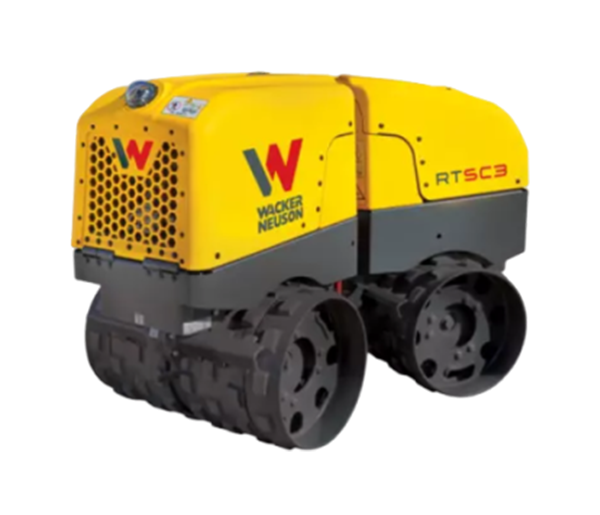
Wacker Neuson describes its RTLx-SC3 as a remote-controlled trench roller using an infrared line-of-sight control system. The manufacturer states that the operator can remain outside the trench or other hazardous working area while controlling the machine. Its published design also uses padfoot drums and below-the-axle exciters intended to transfer compaction energy efficiently into the soil.
This tells me something important about the machine category: a trench roller is not simply a smaller road roller. It is designed around soil compaction in areas where access and operator safety can be major concerns.
Instead of smooth steel drums designed mainly for asphalt finishing, a trench roller commonly uses padfoot or sheepsfoot-style drums. The raised pads press into the soil and help break up and compact suitable cohesive or mixed soils.
The remote-control system is another key difference. Rather than sitting directly on the machine, the operator controls movement and vibration from a separate control unit. This can be useful when the trench contains hazards, when visibility from the machine is poor or when dust, exhaust and noise make close operation uncomfortable.
I would normally consider this type of machine for sewer construction, pipeline installation, foundation backfill, road sub-base work, landscaping earthworks and other projects where soil needs to be compacted in confined spaces.
Published RTLx-SC3 Industry Reference Data
| Reference Item | Published Data | What It Tells Me | Source |
|---|---|---|---|
| Operating weight | 1,465 kg | Compact machine in the roughly 1.5-ton class | Wacker Neuson |
| Drum width | 380 mm | Very narrow working footprint | Wacker Neuson |
| Maximum centrifugal force | 68.4 kN | Substantial dynamic compaction force | Wacker Neuson |
| Vibration frequency | 41 Hz | High-frequency vibration system | Wacker Neuson |
| Maximum gradeability without vibration | 50% | Designed for challenging terrain | Wacker Neuson |
| Travel speed | 1.3–2.5 km/h | Slow controlled movement for compaction | Wacker Neuson |
The figures above come from Wacker Neuson's published RTLx-SC3 technical data. The manufacturer lists 1,465 kg operating weight, 380 mm drum width, 68.4 kN maximum centrifugal force, 41 Hz vibration frequency and up to 50% gradeability without vibration.
These figures are included only as reference data for understanding the equipment category. They are not HKLOONG product specifications.
2. How I Understand the Working Principle
The basic working principle of a trench roller is simple: apply machine weight and vibration to the soil while moving over the area in controlled passes.
Inside the drums, an exciter creates vibration. The vibrating drum transfers dynamic energy into the ground. At the same time, the machine's own weight provides static pressure. Together, these forces help rearrange soil particles and reduce unwanted air spaces.
But soil compaction is not just about applying more force. I need to think about soil type, moisture, layer thickness, machine speed, vibration setting and the number of passes.
For example, heavy clay behaves differently from granular fill. Wet soil can also behave differently from material at a suitable moisture level. That is why the same compaction pattern should not simply be copied from one project to another.
The padfoot drum is particularly important. Instead of presenting one completely smooth surface to the soil, the drum uses raised pads. These pads penetrate into suitable soil and help knead and compact the material as the machine moves.
This makes a padfoot trench roller useful for many earthwork applications involving cohesive or mixed soils. It does not mean that every soil type should be compacted with padfoot drums. Material testing and project specifications still determine the correct equipment.
Remote Control Changes the Working Method
The remote-control system changes how the operator interacts with the machine. With a conventional ride-on roller, the operator sits on the equipment and travels directly through the working zone. With a remote-controlled trench compactor, the operator can stand away from the machine and guide it using the control unit.
Wacker Neuson states that its infrared line-of-sight control system removes the operator from hazards associated with working inside a trench and also keeps the operator away from dust, exhaust fumes and noise. Its published information also describes a proximity sensor that automatically disables the machine within a specified distance between the operator and machine.
I see this as more than a convenience feature. On a trenching project, operator position is part of the equipment-selection decision.
3. Main Features I Look For in a Remote Controlled Trench Roller
When I evaluate a remote controlled trench roller, I focus on five areas: compaction force, access, control, operator protection and serviceability.
Compact working width
Trenches are not wide open roads. The machine needs to fit between structures, pipes, walls and other obstacles. A narrow drum can make a major difference.
The published RTLx-SC3 data list a 380 mm drum width and 820 mm overall machine width. Those dimensions illustrate how this machine category is designed to enter restricted spaces.
I would still check the actual trench width before ordering. The machine needs enough room to move, turn and maintain proper clearance.
Padfoot drums
Padfoot drums are a defining feature of many trench rollers. The raised pads help compact suitable soils through pressure and kneading action. This is particularly useful for backfill and cohesive soil work.
Strong vibration
A trench roller needs enough dynamic force to compact the material effectively. I look at centrifugal force, frequency and amplitude together instead of focusing on only one number.
For the published RTLx-SC3 reference model, Wacker Neuson lists 68.4 kN maximum centrifugal force, 41 Hz vibration frequency and two amplitude levels of approximately 1.3 mm and 2.6 mm.
Remote operation
Remote operation allows the operator to control the machine from outside the immediate working zone. This can be especially useful in deep trenches, around construction hazards and in areas where dust or exhaust would make close operation unpleasant.
Articulated steering
An articulated design allows the machine to bend at a central joint when steering. This can help the roller follow the trench and turn within a restricted space.
Wacker Neuson's published RTLx-SC3 information identifies the machine as an articulated trench roller. The manufacturer also publishes an internal turning radius of 1,600 mm for the reference configuration.
Simple maintenance access
A trench roller works in dirt, dust and vibration. I therefore want easy access to filters, fluids, hydraulic components and inspection points. The easier routine maintenance is, the less likely small service tasks are to be ignored.
4. Technical Advantages and Equipment Comparison
One of the biggest advantages of a trench roller is that it combines a narrow footprint with serious compaction force. That is not always easy to achieve.
A plate compactor can fit into narrow spaces, but its operating pattern and compaction capacity are different. A larger single-drum soil roller can cover more ground, but it may not fit inside a narrow trench. A remote-controlled trench roller sits between these equipment categories.
Trench Roller vs Other Compact Compactors
| Equipment Type | Typical Strength | Typical Limitation | Working Situation |
|---|---|---|---|
| Remote-controlled trench roller | Strong compaction with narrow access | Lower travel speed than larger rollers | Trenches, pipelines, foundations |
| Ride-on soil roller | High productivity over wider areas | Needs more space and direct operator position | Open earthwork and road construction |
| Vibratory Plate Compactor | Very compact and easy to transport | Different production method and lower machine mass | Small repair and confined areas |
| Walk-behind roller | Compact and operator-controlled | Operator remains close to the machine | Small paths and construction areas |
| Padfoot soil compactor | Strong soil compaction | Larger footprint on some models | Large earthwork areas |
This is a functional comparison rather than a universal ranking. Actual selection depends on soil type, trench dimensions, required density, project standards and site safety conditions.
Reference Comparison: RTLx-SC3 and BOMAG BMP 8500
| Specification | Wacker Neuson RTLx-SC3 | BOMAG BMP 8500 | Source |
|---|---|---|---|
| Operating weight | 1,465 kg | 1,480 kg | Manufacturer data |
| Working / drum width | 380 mm drum width | 850 mm working width | Manufacturer data |
| Remote control | Infrared line-of-sight | Radio remote control | Manufacturer data |
| Drum type | Padfoot trench roller | Padfoot drum configuration | Manufacturer data |
| Engine output | Published Kohler diesel configuration | 14.5 kW published version | Manufacturer data |
Wacker Neuson publishes 1,465 kg operating weight and 380 mm drum width for the RTLx-SC3. BOMAG publishes 1,480 kg weight and 850 mm working width for the current BMP 8500, and describes it as a remote-controlled trench roller for confined construction, sewer and pipeline work.
The comparison also shows why I never compare trench rollers only by weight. The published working widths are very different, and the control technologies are different. The machine needs to match the actual trench and project layout.
5. Where I Would Use a Trench Roller RTLx-SC3
I see the strongest use cases for a trench roller in projects where access is limited and soil compaction still has to meet a clear engineering requirement.
Sewer Construction
Sewer trenches can be narrow and deep. Backfill around underground infrastructure needs careful compaction, but putting a large machine into a restricted trench is often not practical. A remote-controlled trench compactor can work in the area while keeping the operator outside the trench.
Pipeline Construction
Pipeline projects are another natural application. After a pipe is installed, the surrounding and upper backfill may need to be compacted in controlled layers. The exact compaction method depends on the pipe design, material and project specification.
Foundation Backfill
Building foundations often create narrow spaces between structures and excavation walls. A compact padfoot trench roller can help compact suitable backfill without requiring a large soil roller to enter the space.
Road Sub-base Construction
Road construction is not only about asphalt. The soil and aggregate layers underneath the pavement also need proper preparation. A trench roller can be useful for confined sub-base areas and utility corridors.
Drainage and Utility Work
Drainage channels, utility trenches and underground service routes often involve narrow working conditions. A compact remote-controlled machine can reduce the need for workers to remain directly beside the compactor.
Landscaping and Horticulture
BOMAG lists horticulture and landscaping among applications for its BMP 8500 trench compactor. This reflects a broader use for compact trench rollers beyond traditional heavy civil construction.
For landscaping projects, the machine can be useful for suitable backfill, paths and earthwork areas where access is restricted. However, surface protection and soil conditions should always be considered.
Confined Earthwork
Some construction areas simply do not have enough room for conventional equipment. That is where I see the greatest value of a compact trench compactor. It gives the contractor a dedicated solution for narrow spaces instead of trying to force a large machine into a small working area.
6. Manufacturing, Quality Control and Practical Design at HKLOONG
A trench roller may be compact, but it is not a simple machine. It combines structural components, vibration systems, hydraulic drive, steering, engine systems and remote control technology. All of these systems have to work together in a dirty and demanding environment.
At HKLOONG, our business covers equipment R&D, precision manufacturing, quality testing, customized modification and global distribution. I apply the same practical thinking to compact machinery as I do to our larger Excavators and loaders.
Structural strength
The frame and articulated joint experience repeated vibration and steering loads. I therefore pay attention to the load path through the machine rather than treating each component separately.
Drum and exciter integration
The drum is both a structural component and a compaction tool. The exciter inside it needs to generate controlled vibration while remaining protected from soil, water and impact-related stress.
Wacker Neuson's RTLx-SC3 information describes hydraulic exciters and below-the-axle exciter positioning. The manufacturer says this layout is intended to support efficient transfer of compaction energy into the soil.
Hydraulic system
Hydraulics can control travel, steering and vibration functions. Hose routing and connection quality are important because the machine operates in tight areas where components can be exposed to dirt and physical contact.
Remote-control system
For a remote-controlled trench roller, the control system is a major part of the product. The operator needs clear feedback and predictable machine movement. Signal reliability, emergency functions, proximity detection and control range all deserve attention.
Wacker Neuson's published RTLx-SC3 data list an infrared remote-control range of 20 meters and a proximity-related safety function. These are specific to that manufacturer's configuration and should not be treated as HKLOONG specifications.
Serviceability
I also consider everyday maintenance. Engine oil, filters, hydraulic components, exciter oil and other service points should be accessible. The machine works in dirt, so cleaning and inspection should be part of normal ownership.
BOMAG's BMP 8500 information, for example, highlights a maintenance-free articulated joint, service-oriented design and protection features. It also describes an enclosed exciter housing intended to keep water and dirt away from the exciter.
These examples show why I treat serviceability as part of machine design rather than an afterthought.
7. Why I Work With Customers on the Complete Compaction Solution
When a customer tells me they need a trench roller, I usually ask several questions before discussing a final configuration.
How wide is the trench? How deep is it? What soil or backfill material is being compacted? Is there a pipeline or foundation nearby? What layer thickness is being used? How much compaction is required? Is the site open enough for a remote-control signal?
These questions help me understand whether a trench roller is actually the right tool.
For example, a 500 mm-wide utility trench and a large foundation backfill area may both need soil compaction, but the equipment requirements are not identical. The working width, turning space and drum configuration can change the practical choice.
HKLOONG also works across a wider construction equipment range. A project may use a crawler excavator for trench excavation, a wheel loader for aggregate handling and a compact trench roller for backfill compaction. Thinking about the complete workflow can help prevent equipment mismatches.
For international customers, I also consider transportation dimensions, engine requirements, remote-control regulations, spare parts, service support and local operating conditions.
My approach is simple: I want the equipment specification to come from the job. I do not want the job to be forced into a generic machine configuration.
8. Trench Roller RTLx-SC3 FAQ
What is a trench roller used for?
A trench roller is mainly used for compacting soil, backfill and sub-base materials in narrow or difficult areas. Common applications include sewer construction, pipeline installation, foundation work, road sub-base preparation and utility trenches.
What is special about a remote-controlled trench roller?
The operator controls the machine from outside the immediate working area. This can be useful in trenches or other locations where direct operation could expose the operator to dust, exhaust, falling material or other site hazards.
What is a padfoot trench roller?
A padfoot trench roller uses drums with raised pads rather than completely smooth drums. The pads penetrate suitable soil and create a kneading and compacting action. This design is commonly used for cohesive or mixed soil applications.
Is the RTLx-SC3 suitable for pipeline construction?
The published Wacker Neuson RTLx-SC3 is designed for trench and sub-base applications, and the manufacturer specifically identifies foundations, roads and parking lots as application areas. Trench rollers of this type are also commonly used in utility and pipeline construction where confined access is important.
Why is remote control useful in a trench?
The operator can remain outside the trench while controlling the machine. This can reduce direct exposure to hazards inside the trench. However, remote control does not remove the need for proper trench safety, site planning, exclusion zones and trained operation.
How does a trench roller compact soil?
The machine combines its own weight with vibration. The vibrating drum transfers dynamic energy into the soil, while the machine's mass provides static loading. Padfoot drums can also create a kneading effect in suitable soils.
What should I check before buying a trench compactor?
I recommend checking operating weight, drum width, centrifugal force, vibration frequency, amplitude, gradeability, travel speed, turning radius, remote-control method, safety functions, engine configuration and maintenance access.
Can a trench roller compact wet soil?
It depends on how wet the soil is and what material is being compacted. A trench roller can work on suitable moist and cohesive soils, but excessively wet material may not compact correctly. Soil moisture and project specifications should always be considered.
Can a trench roller replace a large soil compactor?
Not for every application. A large soil compactor is normally designed for wider open areas and higher production rates. A trench roller is valuable because it can work in restricted areas where larger equipment may not fit.
Can HKLOONG customize a trench roller configuration?
HKLOONG provides customized equipment solutions across its machinery portfolio. For a specific trench roller configuration, I would first confirm the trench dimensions, soil type, required compaction performance, engine requirements and working environment before establishing the final technical specification.
Conclusion: Compact Compaction for Difficult and Confined Work Areas
For me, the main value of the Trench Roller RTLx-SC3 concept is its ability to bring serious soil compaction into places where conventional equipment becomes difficult to use.
A narrow trench does not provide much room for a large roller. At the same time, the soil still needs proper compaction. A remote-controlled padfoot trench roller addresses this gap by combining a compact footprint, vibration, concentrated drum loading and remote operation.
That makes this type of equipment useful for sewer construction, pipeline projects, foundation backfill, utility trenches, road sub-base work, landscaping and other confined earthwork applications.
I also believe that the remote-control system should be treated as part of the complete machine rather than a simple accessory. Signal reliability, operator visibility, proximity safety functions and predictable machine movement all matter when the roller is working in a restricted area.
At HKLOONG Heavy Industry Technology (Hefei) Co., Ltd., I approach compact equipment with the same engineering mindset we use across our broader construction machinery range. Our capabilities cover equipment R&D, precision manufacturing, quality testing, customized modification and global distribution.
If you are sourcing a remote controlled trench roller, trench compactor, padfoot trench roller or pipeline compaction roller, I recommend starting with the actual trench dimensions, soil conditions, required density and working environment. Once these details are clear, the equipment configuration can be matched to the project instead of relying on a generic machine specification.
Industry Reference Sources
Wacker Neuson's official RTLx-SC3 product and technical-data pages were used for reference information covering operating weight, drum width, centrifugal force, vibration frequency, amplitude, gradeability, travel speed, remote-control characteristics and machine dimensions.
BOMAG's official BMP 8500 product information was used for comparison data covering operating weight, working width, engine output and remote-control characteristics, as well as published application information for trench, sewer, pipeline, landscaping and foundation work.
All third-party specifications are industry reference data only. They are not HKLOONG specifications. Actual HKLOONG technical parameters should be confirmed against the final model, component selection and production specification.



 WhatsApp
 Phone
Phone E-mail
 Message