
 Español
 Pусский
 Français
 العربية


When I talk with farmers, agricultural contractors, and machinery buyers about a combine harvester, I usually find that they are not simply looking for a machine with a big engine. They want a harvester that can work through the crop season without making every job complicated. They care about harvesting speed, crop adaptability, grain cleaning, unloading, maintenance, operator comfort, and, of course, whether the machine can fit the actual conditions of their farm.
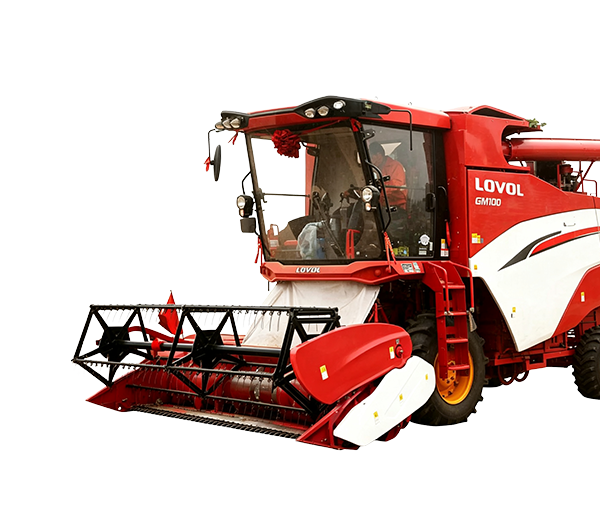
That is where the Wheel Harvester GM100 gets my attention. The LOVOL GM100 is designed as a multi-purpose wheel combine harvester for small and medium-sized farms and agricultural machinery service providers. According to LOVOL's published product information, the GM100 uses a longitudinal axial-flow threshing and separation system and can be configured for crops such as rice, wheat, corn, sorghum, and beans. This multi-crop approach makes the machine useful when one harvesting season is followed quickly by another.
At Ganglong Heavy Industry Technology (Hefei) Co., Ltd., I focus on helping overseas customers choose agricultural machinery according to their real working conditions rather than simply matching a product name to an order. Together with Hefei Ganglong International Trade Co., Ltd., we supply agricultural machinery, construction machinery, mining equipment, and matching attachments to customers in different international markets.
For customers looking for a LOVOL GM100 Wheel Harvester, I can help with model selection, configuration confirmation, inspection, shipping preparation, documentation, and international delivery arrangements. The exact configuration should always be confirmed before the order because LOVOL products can have different specifications for different markets and applications.
1. What Is the Wheel Harvester GM100?
The GM100 is a self-propelled wheeled combine harvester built around a simple idea: one machine should be able to handle more than one crop when the correct header and harvesting components are selected.
Instead of treating wheat, rice, corn, soybean, sorghum, and similar crops as completely separate jobs, the GM100 uses a configurable harvesting system. LOVOL states that different attachments can be used to adapt the machine to different crops. This is important for agricultural contractors because the machine may move from one customer's field to another during the same season.
The published GM100 specification lists a 175 PS engine configuration, a 3,860 mm cutting width, a 10 kg/s feed capacity, a 2,800 L grain tank, and a longitudinal axial-flow threshing system. The same official data lists a working efficiency range of 0.8–2.0 hm²/h, although actual field output naturally depends on crop yield, moisture, field conditions, operator settings, and working speed.
| GM100 Parameter | Published Specification | Practical Meaning |
|---|---|---|
| Engine power | 175 PS; 190 PS configuration also published | Provides the power needed for harvesting and field movement |
| Cutting width | 3,860 mm | Allows a relatively wide harvesting pass |
| Feed capacity | 10 kg/s | Supports continuous crop feeding into the harvesting system |
| Grain tank | 2,800 L | Provides temporary grain storage before unloading |
| Threshing system | Longitudinal axial flow | Supports threshing and separation inside one continuous flow system |
| Cleaning system | Air-and-screen cleaning | Helps separate grain from lighter material and impurities |
| Unloading height | About 3,700 mm | Designed to work with different receiving vehicles |
Source: LOVOL official GM100 Wheel Combine Harvester product information. Specifications can vary by configuration and market.
I always recommend treating these figures as a starting point rather than a promise of the same result in every field. A combine working in dry wheat on a flat field will behave differently from the same machine working in wet rice or heavy corn. That is why I ask about crop type, field size, soil conditions, annual working hours, transport distance, and available attachments before discussing the final configuration.
2. How the GM100 Wheel Combine Harvester Works
The working process of a combine harvester sounds complicated when you look at the machine from the outside, but the basic idea is easy to understand.
First, the header gathers the standing crop and cuts it. The crop then moves through the feeding system and enters the threshing area. The GM100 uses a longitudinal axial-flow threshing and separation drum. In simple terms, the crop keeps moving along the drum while grain is separated from the harvested material.
After threshing and separation, the grain passes through the cleaning system. The GM100 uses an air-and-screen cleaning arrangement. Air helps remove lighter material while the screens separate grain according to size and movement. The cleaned grain then moves into the grain tank.
When the grain tank is ready for unloading, the unloading auger transfers the grain into a trailer, truck, or other receiving vehicle. LOVOL's published information says the unloading process can take about 90 seconds under its stated conditions.
For me, the key point is that these processes need to work together. A powerful engine alone does not make a good combine. If crop feeding is uneven, threshing settings are wrong, cleaning is overloaded, or unloading takes too long, the operator still loses time.
That is why I look at the GM100 as a complete harvesting system rather than just a machine with a large engine.
3. Main Features I Look At on the GM100
Multi-Crop Capability
The biggest practical feature is crop adaptability. LOVOL describes the GM100 as a multi-purpose harvester and lists rice, wheat, corn, sorghum, and beans among its applications. Different headers and harvesting components can be selected according to the crop.
This matters when a customer does not want a machine that sits idle after one crop season. A contractor may harvest wheat in one area, move to soybean fields later, and then work on another crop. The ability to configure the machine for different jobs can make the equipment more useful across the year.
Longitudinal Axial-Flow Threshing
The GM100 uses a longitudinal axial-flow threshing and separation drum measuring approximately 600 mm in diameter and 3,145 mm in length in the published configuration. LOVOL also lists a continuously variable drum speed range of 289–1,150 rpm.
Why does this matter? Crop conditions change. Grain moisture, crop density, crop variety, and harvesting speed can all affect the way material moves through a combine. Adjustable drum speed gives the operator more room to find a suitable working setting instead of relying on one fixed speed.
Wide Header
The published GM100 specification gives a cutting width of 3,860 mm. A wider header means the machine can cover more crop in each pass, provided field conditions and crop density allow the machine to maintain the required working speed.
I would not look at header width alone, though. The correct header depends on the crop. For a customer buying a GM100 agricultural combine harvester, I would first confirm the main crops and then discuss the suitable harvesting attachment.
Large Grain Tank
The published GM100 specification lists a 2,800 L grain tank. For field work, grain tank size matters because frequent unloading interrupts harvesting. A larger tank gives the operator more working time before stopping to transfer grain.
Practical Unloading
LOVOL lists an unloading height of approximately 3,700 mm and highlights a strong unloading auger. This gives the GM100 useful flexibility when transferring harvested grain to different receiving vehicles.
Operator-Oriented Cab
Long harvesting days can be tiring, so operator comfort should not be treated as a decorative feature. LOVOL's published GM100 information describes a positive-pressure cab, adjustable seat, adjustable steering mechanism, working lights, and a wide field of view. The purpose is simple: make it easier for the operator to see the crop and controls while spending many hours in the field.
4. GM100 Technical Comparison for Buyers
When customers ask me whether the GM100 is suitable for their farm, I normally compare it with other LOVOL wheel combine configurations instead of looking at one specification in isolation. The following figures come from LOVOL's published product pages and are useful for understanding the general positioning of the machines.
| Model | Engine Power | Cutting Width | Feed Capacity | Grain Tank | Working Efficiency | Threshing System |
|---|---|---|---|---|---|---|
| GM80 | 175 PS | 3,250 mm | 8 kg/s | 2,600 L | 0.6–1.8 hm²/h | Longitudinal axial flow |
| GM100 | 175 PS | 3,860 mm | 10 kg/s | 2,800 L | 0.8–2.0 hm²/h | Longitudinal axial flow |
| GK120 | 220 PS | 5,340 mm | 12 kg/s | 5,000 L | 1.0–2.0 hm²/h | Single longitudinal axial flow |
Source: LOVOL official published agricultural equipment specifications for GM80, GM100 and GK120. These figures are configuration-specific and should be reconfirmed for the target market before ordering.
This table also shows why I do not simply say that one machine is suitable for everyone. A smaller farm may have different needs from a large agricultural contractor. A customer working mainly with wheat may have different requirements from someone harvesting rice and corn. Field size, transport roads, crop yield, local service conditions, and annual working hours all affect the decision.
5. Where I Would Use a GM100
Wheat Harvesting
Wheat is one of the main applications considered when discussing a multi-crop combine. For wheat harvesting, I pay particular attention to header configuration, crop density, grain moisture, threshing settings, and straw handling.
The GM100's longitudinal axial-flow system and adjustable threshing speed provide the operator with a practical setup for different field conditions. The final harvesting result still depends heavily on correct machine adjustment and crop conditions.
Rice Harvesting
Rice fields can be much harder on machinery than a dry, firm field. Wet soil, soft ground, high crop moisture, and difficult access can all affect field performance.
For a rice harvesting project, I would check the local field conditions before confirming the configuration. The header, tire setup, machine transport route, and operating conditions all deserve attention.
Corn and Grain Crops
The GM100 is also designed around multi-crop use. LOVOL's published information states that different attachments can be used for crops including corn and beans, while its product information also references soybean and other grain crops in the multi-purpose application range.
For corn grain harvesting, the attachment and harvesting configuration are especially important. I would never recommend treating a wheat header and a corn harvesting setup as interchangeable just because the base machine is the same.
Agricultural Machinery Service Companies
The GM100 can also make sense for machinery service providers who operate machines for multiple farms. In this type of business, machine utilization is important. The more suitable jobs a machine can handle, the easier it can be to schedule equipment throughout the agricultural season.
This is one reason LOVOL positions the GM100 for agricultural machinery service providers as well as small and medium-sized farms.
6. What I Check Before Supplying a GM100 Overseas
Buying a combine harvester internationally is different from buying a small spare part. The machine is large, the shipping cost is significant, and the correct configuration matters. At Ganglong, I prefer to confirm the details before the order rather than trying to solve everything after the machine is already on the ship.
First, I confirm the customer's main crops. I want to know whether the machine will mainly harvest wheat, rice, corn, soybean, sorghum, or a combination of crops.
Second, I check the working environment. Is the land flat? Is the soil soft? Is the field large or divided into small plots? What is the typical crop yield? How far does the machine need to travel between fields?
Third, I confirm the required attachments. A multi-crop combine is only truly multi-purpose when it is equipped with the correct harvesting components for the job.
Fourth, I check the power and configuration. LOVOL's public information includes different GM100 power descriptions, including a 175 PS configuration and a 190 HP Stage III option on its English product page. Other regional LOVOL pages publish the GM100 under the 175 PS configuration. Because of this, I always recommend confirming the exact model and specification before signing the final order.
Finally, I arrange the inspection and shipping preparation. Before delivery, we can check the engine, hydraulic system, electrical system, tires, working functions, attachments, and relevant documents according to the order requirements.
7. Manufacturing, Inspection, Packing and International Delivery
As an international machinery supplier, I know that a machine is not ready simply because it has left the production line. Export preparation is part of the job.
For a LOVOL GM100 Wheel Combine Harvester, the preparation process normally starts with order and configuration confirmation. We check the machine model, required attachments, destination, shipping method, documents, and customer requirements.
Before shipment, the machine can be inspected according to the agreed checklist. Important areas include the engine, hydraulic functions, electrical system, harvesting system, grain unloading system, tires, controls, and attachments.
We also pay attention to transportation preparation. Loose accessories and smaller components can be packed separately in cartons or wooden cases according to the product and shipping requirements. The complete machine is normally prepared for sea transportation, while suitable spare parts and smaller accessories may be shipped by air or express.
| Stage | What I Confirm | Why It Matters |
|---|---|---|
| Order confirmation | Model, crop, configuration, attachments | Prevents configuration mistakes |
| Machine inspection | Engine, hydraulic, electrical and working functions | Helps confirm the machine is ready for delivery |
| Accessory check | Headers, attachments, loose parts and documents | Ensures the shipment matches the order |
| Transport preparation | Protection, securing and packing | Reduces transportation risks |
| Shipping | Sea, air or express according to product and destination | Balances machine size, urgency and freight requirements |
| Document preparation | Commercial and machine-related documents | Supports customs clearance and delivery |
Source: Ganglong Heavy Industry Technology (Hefei) Co., Ltd. international order and delivery process information supplied for this product page.
For payment, international orders are commonly arranged by T/T, with a deposit before order processing and the balance before shipment. Exact payment terms depend on the final agreement. The production and preparation period also depends on the selected LOVOL model, configuration, order quantity, and machine availability.
8. Why I Work with Ganglong for Agricultural Machinery Supply
Ganglong Heavy Industry Technology (Hefei) Co., Ltd. was founded in 2013. Together with Hefei Ganglong International Trade Co., Ltd., we operate as part of a broader industrial group connected with China Construction Machinery (Group) Co., Ltd.
Our business covers equipment R&D, manufacturing, testing, customization, sales, leasing, and international trade. We also supply our self-branded HKLOONG Excavators, loaders, Backhoe loaders, and swamp excavators, while providing complete machine sales and leasing services for brands including Hitachi, SANY, Lonking, Hyundai, XCMG, SHANMON, and LOVOL.
When it comes to LOVOL agricultural machinery, I want to make one point very clear: our role is to supply and arrange the equipment according to the customer's requirements. We do not describe third-party LOVOL equipment as our own manufactured product. This distinction matters when you are buying machinery internationally and need accurate information about the brand, model, configuration, and after-sales responsibilities.
Our international trade team has experience working with construction machinery, mining machinery, and agricultural machinery. Customers we serve are located across Asia, Africa, America, and other international markets.
For a customer asking about a GM100 Wheel Harvester for sale, I can help turn a general inquiry into a specific equipment plan. We can discuss the crop, working area, configuration, attachments, destination, shipping method, inspection requirements, and documents before the order is finalized.
That practical step is important. A combine harvester is not a small online purchase where choosing the wrong option means simply returning a package. The machine may travel thousands of kilometers. Getting the configuration right at the beginning saves time and avoids unnecessary trouble later.
Frequently Asked Questions About the Wheel Harvester GM100
1. What crops can the LOVOL GM100 harvest?
LOVOL describes the GM100 as a multi-purpose harvester and lists crops including rice, wheat, corn, sorghum, and beans. Different attachments and harvesting components are used according to the crop.
2. What is the feed capacity of the GM100?
The published GM100 specification lists a feed capacity of 10 kg/s. Actual crop throughput in the field depends on crop yield, moisture, field conditions, machine settings, and operating speed.
3. What is the cutting width of the GM100?
The official GM100 product page lists a cutting width of 3,860 mm. The exact header configuration should be confirmed according to the crop and target market.
4. What type of threshing system does the GM100 use?
The GM100 uses a longitudinal axial-flow threshing and separation system. The published configuration specifies a 600 mm diameter by 3,145 mm longitudinal axial-flow drum with adjustable rotational speed.
5. What is the GM100 grain tank capacity?
The published GM100 specification lists a 2,800 L grain tank. This provides temporary storage during harvesting before grain is unloaded into a receiving vehicle.
6. Can I buy a GM100 for export?
Yes. Ganglong and Hefei Ganglong International Trade Co., Ltd. handle international machinery orders and can arrange export preparation and shipping according to the destination and order requirements.
7. How long does delivery take?
The final preparation and delivery schedule depends on the exact GM100 configuration, attachments, order quantity, machine availability, inspection requirements, and shipping arrangement. I recommend confirming the schedule before placing the order.
8. How is the GM100 usually shipped?
Complete agricultural machines are generally transported by sea for international orders. Smaller spare parts and suitable accessories can be transported by air or express. The final method depends on the destination, machine size, urgency, and customer requirements.
9. Can you inspect the GM100 before shipment?
Yes. We can arrange pre-shipment checks covering the engine, hydraulic system, electrical system, tires, harvesting functions, attachments, and required documents according to the agreed inspection requirements.
10. Is the GM100 suitable for a small farm?
The GM100 is published by LOVOL as a machine for small and medium-sized farms and agricultural machinery service providers. Whether it fits a particular farm depends on field size, annual crop volume, crop type, local field conditions, and the customer's harvesting plan.
Final Thoughts: Choosing a Combine That Fits the Actual Farm
When I look at the Wheel Harvester GM100, I do not see it simply as another large agricultural machine. I see it as a practical multi-crop harvesting platform designed around flexibility.
The combination of a wheeled chassis, longitudinal axial-flow threshing system, adjustable threshing speed, wide header options, 10 kg/s published feed capacity, 2,800 L grain tank, air-and-screen cleaning, and multi-crop attachment options gives the GM100 a broad working range.
But the most important point is still the match between the machine and the farm. The right combine depends on what you grow, where you grow it, how much you harvest, and how the machine will be used throughout the year.
If you are looking for a LOVOL GM100 Wheel Harvester, GM100 Wheel Combine Harvester, or a multi-crop agricultural combine for an overseas farming project, I can help you confirm the suitable configuration, harvesting attachments, inspection requirements, packing, payment terms, and shipping plan before the order is finalized.
That is how I prefer to handle agricultural machinery: start with the field, then choose the machine.



 WhatsApp
 Phone
Phone E-mail
 Message