
 Español
 Pусский
 Français
 العربية


When I look at a large hydraulic excavator for mining, quarrying, earthmoving, or heavy material handling, I do not start with the machine name or engine power alone. I start with the job. What material will the Excavator dig? How deep does it need to work? How large are the haul trucks? How many hours will the machine run each day? And how much space is available for the machine to turn, travel, and load?
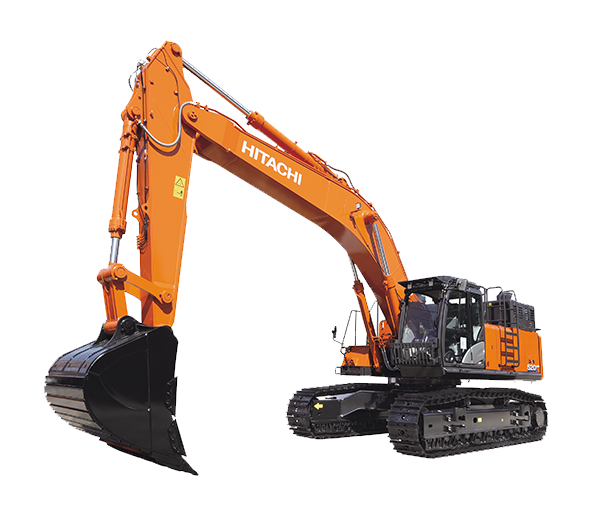
The ZX520LCH-6A Hitachi Construction Machinery Hydraulic Excavator is a useful reference when I am evaluating equipment in the 45- to 50-ton large crawler excavator class. Published specifications show a rated engine power of about 296 kW, an operating weight of approximately 48,400 to 48,600 kg, and a bucket capacity of around 2.1 to 3.0 m³ for the commonly published configuration. The model is positioned for mining-type applications and uses a crawler undercarriage for stability on demanding ground.
For me, the value of a machine in this class comes from how its systems work together. The engine supplies power, the hydraulic system turns that power into digging and lifting movement, the boom and arm transfer force to the bucket, and the undercarriage keeps the whole machine stable. If one part is poorly matched, the benefit of the other parts can be reduced.
On this page, I will look at the ZX520LCH-6A from a practical engineering and purchasing perspective. I will explain how the machine works, what I look for in its main systems, where this type of excavator fits, and how I would approach configuration, inspection, manufacturing, and support at HKLOONG.
1. What Is the ZX520LCH-6A Hydraulic Excavator?
The ZX520LCH-6A is a large crawler hydraulic excavator from Hitachi's ZAXIS family. The model is designed for demanding excavation and material-handling work rather than light construction. Its approximately 48.5-ton operating weight gives it a much larger working platform than a normal 20- or 30-ton excavator.
The published engine rating is 296 kW, or about 402 PS. Public equipment specifications identify the machine as a crawler excavator with a backhoe bucket and mining-oriented working conditions. Commonly published bucket capacity is 2.1 to 3.0 m³. These numbers provide a good starting point when I compare the machine with other Excavators in the same size class.
What does a 48-ton machine mean in real work? It means I can expect more structural capacity and working stability than from a smaller excavator, but it also means the project must be prepared for the machine. Transport, ground bearing capacity, service access, fuel supply, and working space all become more important.
I also pay attention to the long undercarriage and track system. A crawler excavator does not depend on tires for mobility. Its tracks spread the machine's weight across the ground and provide traction when the excavator is working on uneven surfaces. This is especially useful in quarrying, mining, large earthmoving, and other jobs where the ground is not perfectly flat.
The ZX520LCH-6A is therefore not simply a larger version of a general Construction Excavator. Its size, power, bucket range, and mining-oriented configuration make it more appropriate for projects where the machine must repeatedly handle large volumes of material.
When I evaluate this class of equipment, I also look beyond the specification sheet. A machine can have a strong engine and a large bucket, but real productivity depends on the complete cycle: digging, lifting, swinging, dumping, returning, and repeating. Good machine selection means matching all of those movements to the job.
2. How I Understand the Working Principle
The basic idea behind a hydraulic excavator is quite simple. The engine produces mechanical power. Hydraulic pumps use that power to create oil flow and pressure. Control valves direct the hydraulic oil to different cylinders and motors. The cylinders move the boom, arm, and bucket, while hydraulic motors control swing and travel.
On the ZX520LCH-6A, the hydraulic system is one of the main reasons I would look at this machine for demanding work. Published information describes the model as using Hitachi's HIOS V hydraulic system. The system is designed to coordinate hydraulic flow with operator commands so that different movements can work together more smoothly.
For example, during a normal digging cycle, I may lower the boom while extending the arm and curling the bucket. After the bucket is full, I raise the boom and swing the upper structure toward a truck. These are combined movements, not separate actions. If hydraulic control is not well matched, the operator may experience slow response or unnecessary pressure loss.
A Large Excavator also needs strong digging force. When bucket teeth enter compacted soil or blasted rock, the resistance can be very high. The hydraulic cylinders need to produce enough force, while the boom, arm, pins, bushings, and frame must transfer that load safely.
That is why I always consider the hydraulic system and mechanical structure together. Hydraulic pressure without structural strength is not useful. A strong structure without enough hydraulic response is also inefficient.
The machine's electronic control system is another part of the picture. Modern excavators use sensors and controllers to monitor operating conditions and manage engine and hydraulic performance. On the 6A generation, Hitachi's published material highlights the HIOS V hydraulic control system as an important part of the efficiency and operating response of the machine.
From the operator's seat, the goal is simple: I want the machine to respond when I move the controls, remain predictable during combined movements, and provide enough force when the bucket enters difficult material. That practical response matters more to me than a long list of technical terms.
3. Main Features I Look For in the ZX520LCH-6A
High-Power Engine
The published 296 kW rated power puts the ZX520LCH-6A firmly into the large excavator category. For heavy excavation, this power level provides the energy needed for hydraulic operation, travel, and swing functions while maintaining useful working performance under load.
I would not, however, treat horsepower as a productivity number by itself. Fuel consumption, material density, cycle time, bucket fill factor, operator skill, and truck matching all affect actual output.
Large Bucket Capacity
Published specifications commonly list a 2.1 to 3.0 m³ bucket range for the ZX520LCH-6A. This is a useful range for large excavation and loading work. The correct bucket depends on the material.
Loose soil and gravel can support a different bucket choice from hard rock. A Rock Bucket needs suitable wear protection and tooth strength, while a general-purpose bucket may focus more on volume and digging efficiency. I would always match bucket type to material before deciding which configuration makes sense.
Reinforced Front Working Equipment
Published descriptions of the ZX520LCH-6A highlight concentrated reinforcement of the front working equipment. This is important because the boom and arm are exposed to repeated loads throughout every digging cycle.
When I inspect a large excavator, I pay close attention to the boom, arm, bucket connection, pins, bushings, and hydraulic cylinders. Wear in these areas can influence both productivity and maintenance cost.
Stable Crawler Platform
The crawler undercarriage is a major part of the machine. It carries almost the entire operating weight and has to deal with travel, turning, vibration, and digging forces.
For mining and quarry applications, undercarriage condition is especially important. Track chains, rollers, idlers, sprockets, track shoes, and tension systems all experience wear. On a used machine, I would inspect these parts before making a purchasing decision.
Operator-Focused Cab
Large excavation is repetitive work. Operators may spend many hours in the cab every day, so visibility, control layout, seat adjustment, noise, vibration, and climate control all matter.
A comfortable operator is not just a comfort issue. Clear visibility and predictable controls can help the operator work more accurately and avoid unnecessary machine movements.
4. ZX520LCH-6A Technical Reference and Comparison
Before I choose a large crawler excavator, I like to compare it with machines from nearby size classes. The following table uses published industry reference data. It is intended to show the approximate position of the ZX520LCH-6A rather than present a purchasing ranking.
| Model | Rated Power | Operating Weight | Published Bucket Capacity | Typical Position |
|---|---|---|---|---|
| Hitachi ZX520LCH-6A | 296 kW | 48,400–48,600 kg | 2.1–3.0 m³ | Large mining crawler excavator |
| Hitachi ZX370H-6A | 210 kW | Approx. 35.9–36.0 t | Approx. 1.6–1.8 m³ | Large crawler excavator |
| Hitachi ZX730LCH-6A | 348 kW | Approx. 69.1–69.3 t | Approx. 4.0–5.0 m³ | Large mining crawler excavator |
| Hitachi ZX900LCH-6A | 382 kW | Approx. 85.4 t | Approx. 5.0–6.0 m³ | Very large mining crawler excavator |
Sources: published Hitachi-related model specifications compiled by First Construction Machinery Network and industry equipment references. These figures are reference data only and are not HKLOONG specifications.
This comparison helps me see where the ZX520LCH-6A sits. It is considerably larger than a 35- to 40-ton machine, but it is also smaller than 70- and 85-ton Mining Excavators. That middle position can be useful when a project needs substantial digging power without moving all the way into the very large mining-machine class.
I also compare the machine by working range because bucket size alone does not tell me how useful an excavator will be.
| Working Parameter | ZX520LCH-6A Reference | Why I Check It |
|---|---|---|
| Maximum digging radius | About 12,060 mm in one published H-boom configuration | Shows how far the machine can reach the excavation face |
| Maximum digging depth | About 7,860 mm in the referenced configuration | Important for deep excavation |
| Maximum cutting height | About 10,980 mm | Useful for high-side excavation and loading |
| Maximum dumping height | About 7,560 mm | Important when loading different truck bodies |
| Minimum swing radius | About 4,840 mm | Helps evaluate site space and machine positioning |
Source: published ZX520LCH-6A working-range data from industry technical documentation. Working range changes with boom, arm, bucket, and equipment configuration.
One point is worth stressing: I would never use a working-range table as a promise for every ZX520LCH-6A machine. Different boom and arm combinations change the geometry. The actual configuration must always be confirmed before a project is planned around a specific reach or digging depth.
5. Where I Would Use the ZX520LCH-6A
Mining and Quarrying
Mining is one of the clearest applications for this machine class. A large crawler excavator can work on material such as overburden, hard soil, gravel, and blasted rock. The machine's power and bucket size allow it to move significant quantities of material in each cycle.
In a quarry, I would normally consider the complete loading system. The excavator needs to work together with haul trucks. If the truck is too small, the excavator may spend time waiting. If the truck is too large, the excavator may require too many bucket cycles to fill it. Good production comes from matching the machines.
Large Earthmoving
Major earthmoving projects can also benefit from this type of excavator. Industrial construction, large foundations, dams, road projects, ports, and land development can require the removal and relocation of large volumes of soil.
Here, I would look at digging depth, reach, truck loading height, ground conditions, and daily working hours. A machine that fits the site can reduce unnecessary travel and help maintain a steady cycle.
Infrastructure Construction
Large infrastructure projects often involve excavation at a scale that is beyond normal construction equipment. The ZX520LCH-6A class can be useful for bulk excavation, site preparation, trenching at large scale, and material loading where the working envelope and machine size fit the project.
Rock Excavation
When working with rock, bucket design becomes particularly important. I would consider rock teeth, wear plates, bucket reinforcement, material density, and hydraulic digging force. The operator also needs to avoid using the excavator in ways that create unnecessary shock loads.
Heavy Material Handling
With a suitable approved attachment, large crawler excavators can perform specialized material handling work. However, I would always check attachment weight, hydraulic requirements, center of gravity, working radius, and machine stability before changing the configuration.
6. How I Evaluate Productivity and Operating Cost
When someone asks me how productive a large excavator is, I do not give a simple answer based on bucket capacity. I calculate the whole working cycle in practical terms.
First, I look at the bucket. A 2.5 m³ bucket does not always move 2.5 m³ of material in every cycle. Fill factor, material density, bucket shape, and digging conditions all matter.
Next, I look at cycle time. The operator needs to dig, lift, swing, dump, and return. If the excavator has to make a long swing because the truck is parked too far away, productivity can fall even if the machine itself is powerful.
Fuel consumption is another major operating cost. Engine efficiency and hydraulic efficiency matter, but the operator's working method also has a large influence. Excessive idling, unnecessary high engine speed, long travel distances, and poorly matched trucks can increase fuel use.
Maintenance is part of productivity too. I would rather have a machine that is easy to inspect and maintain than one that looks impressive but takes too much time to service. Daily checks of engine oil, hydraulic oil, coolant, filters, tracks, hoses, pins, and grease points can help catch problems before they become larger repairs.
For a used ZX520LCH-6A, I would also inspect the service history. Engine condition, hydraulic pump response, cylinder leakage, swing performance, travel motors, and undercarriage wear should all be checked. A machine's age or hour meter alone does not tell me its actual condition.
| Inspection Area | What I Check | Why It Matters |
|---|---|---|
| Engine | Starting, smoke, sound, oil condition, cooling | Power and long-term operating reliability |
| Hydraulic system | Pump response, pressure, hoses, cylinders, leakage | Digging force and combined movement |
| Undercarriage | Track chain, rollers, idlers, sprockets, shoes | Travel stability and replacement cost |
| Front equipment | Boom, arm, bucket, pins and bushings | Structural condition and digging accuracy |
| Swing system | Swing response, abnormal noise, backlash | Loading cycle and machine control |
| Cab and controls | Display, joysticks, seat, visibility, HVAC | Operator efficiency and working comfort |
Source: practical heavy-equipment inspection criteria based on published machine service information and used-equipment inspection practices. This is a general inspection guide, not a Hitachi factory inspection checklist.
7. How I Approach Manufacturing, Quality Control and Customized Machinery at HKLOONG
At HKLOONG Heavy Industry Technology (Hefei) Co., Ltd., I look at heavy equipment as a complete working system. Our company focuses on equipment R&D, precision manufacturing, quality testing, customized modification, and global distribution. Our product range includes crawler excavators, Wheel loaders, Backhoe loaders, and amphibious Wetland excavators.
When I discuss a machine similar to the ZX520LCH-6A with a customer, I first want to understand the job. A mining excavator and a general Earthmoving Excavator may have similar basic structures, but their working conditions can be very different.
I would ask about material hardness, average material density, required digging depth, truck loading height, daily operating hours, ground conditions, temperature, transport restrictions, and attachment requirements.
Then I look at the machine structure. The boom and arm must be matched to the expected load. Hydraulic cylinders need suitable sizing. Pins and bushings need good wear resistance. The undercarriage needs to support the machine under travel and digging loads. Hydraulic hoses need proper routing and protection from damage.
During manufacturing and inspection, I pay attention to weld quality, dimensional accuracy, hydraulic connections, cylinder movement, control response, leakage, abnormal vibration, and overall machine assembly. For export projects, I also consider shipping dimensions, documentation, spare parts, maintenance information, and local operating conditions.
Customization should also be based on engineering rather than simply adding components. If a customer needs a different attachment or working configuration, I would check hydraulic flow, hydraulic pressure, attachment weight, machine stability, structural loading, and operating range before confirming the solution.
This approach is particularly important for heavy equipment because a small change in one system can affect another. A heavier attachment, for example, changes the machine's center of gravity and may affect lifting behavior. A high-flow attachment may require a different hydraulic arrangement. Good customization starts with understanding these relationships.
8. Why I Consider HKLOONG for Large Excavator Solutions
When I work with an international equipment buyer, I know that purchasing a large machine involves more than comparing two numbers on a specification sheet. The buyer also needs to consider application matching, customization, transport, spare parts, maintenance, and after-sales communication.
That is where I see value in HKLOONG's integrated approach. We combine equipment R&D, precision manufacturing, quality testing, customized modification, and global distribution under one organization.
Our experience covers crawler excavators and other heavy machinery used in demanding environments. This gives me a practical basis for discussing machine size, working equipment, attachments, undercarriage requirements, and different jobsite conditions.
I also prefer to keep technical communication clear. If a customer asks for a large hydraulic excavator, I want to know whether the actual requirement is mining, quarrying, bulk excavation, material loading, wetland construction, or another application. The answer changes the equipment configuration.
For customers researching a ZX520LCH-6A Hitachi Construction Machinery Hydraulic Excavator, the model can be used as a reference point for the 45- to 50-ton excavator class. At HKLOONG, I can then approach the project from the actual job requirements and discuss a suitable heavy machinery configuration rather than assuming that one machine specification fits every site.
Frequently Asked Questions About the ZX520LCH-6A
What is the operating weight of the ZX520LCH-6A?
Published specifications commonly list an operating weight of approximately 48,400 to 48,600 kg. Other sources may show slightly different figures depending on boom, arm, bucket, track shoe, and working equipment configuration. I would always confirm the exact configuration before arranging transportation.
How much power does the ZX520LCH-6A have?
The commonly published rated engine power is 296 kW, equivalent to approximately 402 PS. Some sources separately list net engine output at around 295 kW or 401 PS. For purchasing and comparison, I would use the exact rated-power definition stated in the original specification sheet.
What is the bucket capacity of the ZX520LCH-6A?
Commonly published specifications list a bucket capacity of approximately 2.1 to 3.0 m³. Some industry sources show broader optional configurations, so the actual bucket must be confirmed according to the working equipment and application.
Is the ZX520LCH-6A suitable for mining?
Yes. Published product information identifies the ZX520LCH-6A as a mining-type large crawler excavator. Its power, operating weight, crawler undercarriage, hydraulic system, and bucket range make it suitable for demanding excavation and loading work when the configuration matches the site.
How deep can the ZX520LCH-6A excavate?
Published working-range data vary by boom and arm configuration. One commonly referenced configuration lists a maximum digging depth of approximately 7,860 mm. Other configurations have different working envelopes. I would therefore confirm the boom and arm combination before using a specific depth in project planning.
What should I inspect on a used ZX520LCH-6A?
I would inspect the engine, hydraulic pumps, main control valves, cylinders, hoses, boom, arm, bucket, pins, bushings, swing system, travel motors, track chains, rollers, idlers, sprockets, cab controls, and service history. Undercarriage wear is especially important on a large crawler excavator because replacement costs can be significant.
Can the ZX520LCH-6A be used for quarry work?
Yes. Quarrying is a suitable application when the machine is configured for the material and working method. For hard rock, I would pay particular attention to bucket reinforcement, teeth, wear protection, digging conditions, and the condition of the front working equipment.
How do I choose between a 40-ton and 50-ton excavator?
I would compare the required bucket size, material density, digging depth, truck loading height, working hours, ground conditions, transportation limits, and expected production. A larger machine can offer greater working capacity, but it also requires more transport planning and site preparation. The correct choice is the one that fits the complete job.
Final Thoughts
When I evaluate the ZX520LCH-6A Hitachi Construction Machinery Hydraulic Excavator, I see a machine designed around heavy excavation rather than light general construction. Its published 296 kW engine rating, approximately 48.4- to 48.6-ton operating weight, crawler undercarriage, and 2.1- to 3.0 m³ commonly published bucket range put it into a serious large-excavator working class.
The machine also shows why I prefer to evaluate construction equipment as a complete system. Engine power matters, but so do hydraulic response, bucket selection, boom and arm strength, undercarriage condition, working range, operator control, maintenance access, and the way the excavator works together with trucks and other equipment.
For mining, quarrying, large earthmoving, infrastructure construction, and heavy material handling, a machine in this class can make sense when the job requires substantial digging force and material-moving capacity. But I would always confirm the actual configuration before using published figures for a project plan.
At HKLOONG, I take the same practical approach. I start with the customer's working conditions, then consider machine structure, hydraulic requirements, attachments, operating environment, customization, quality control, transport, and long-term service needs.
That is how I approach large construction machinery: not by chasing a single specification, but by making sure the complete machine and the complete job are properly matched.



 WhatsApp
 Phone
Phone E-mail
 Message