
 Español
 Pусский
 Français
 العربية


When I look at a medium-size Excavator, I do not judge it only by engine power or bucket size. I also look at how easily the machine can work in real conditions, how stable it feels when digging, how simple daily maintenance is, and whether the machine can handle different attachments. That is why the ZX130-6A Hitachi Construction Machinery Hydraulic Excavator is a useful reference when I evaluate excavator design and working performance.
The ZX130-6A belongs to the class of hydraulic Excavators used for construction, earthmoving, road work, landscaping, municipal projects, material handling, and many other applications. Public Hitachi documentation for the China-market ZX130C-6A lists a 74 kW engine, an operating weight of about 12.9 to 13.0 tonnes, and a 0.52 m³ ISO heaped bucket in the referenced configuration. Hitachi's North American ZX130-6 documentation uses a different configuration, so I treat regional specifications separately rather than mixing them together.
At HKLOONG Heavy Industry Technology (Hefei) Co., Ltd., I focus on equipment R&D, precision manufacturing, quality testing, customized modification, and global distribution. Our product range covers crawler excavators, Wheel loaders, Backhoe loaders, and amphibious Wetland excavators. I use this practical engineering background when looking at excavator structure, hydraulic performance, attachment matching, and jobsite requirements.
1. What I Look for in a 13-Ton Class Hydraulic Excavator
A machine in the 13-ton class sits in a useful position between Compact Excavators and larger 20-ton machines. It is large enough for serious digging and earthmoving, but it can still be easier to transport and position on many medium-size construction sites.
When I specify a ZX130-6A hydraulic excavator, I pay attention to five basic areas: digging force, hydraulic response, machine stability, working range, and attachment compatibility. These points directly affect what the operator can do during an ordinary working day.
The basic working cycle is simple. The engine provides power, the hydraulic pumps send pressurized hydraulic oil to the control valves, and the valves direct oil to the boom, arm, bucket, swing motor, and travel motors. The operator controls these movements through hydraulic pilot controls or electronic controls depending on the machine configuration.
This system allows the operator to combine movements. For example, the boom can be raised while the arm moves inward and the upper structure swings. Smooth combined movement is important because excavation is rarely just one movement at a time.
| Reference Item | ZX130C-6A Published Data | Why I Check It |
|---|---|---|
| Engine rated power | 74 kW / 101 PS | Shows the basic power class |
| Operating weight | 12,900–13,000 kg | Important for transport and jobsite stability |
| ISO heaped bucket | 0.52 m³ | Helps match digging volume to the machine |
| H-type boom | 4.60 m | Useful reference for working range |
| H-type arm | 2.52 m | Affects digging reach and depth |
Source: Hitachi Construction Machinery China ZX130C-6A public product documentation. Specifications can vary by market and configuration.
2. How the ZX130-6A Excavator Works
The working principle of a hydraulic excavator is easier to understand than it may first appear. I normally explain it as a power chain: engine, hydraulic pump, control valve, hydraulic actuator, and working attachment.
The diesel engine drives the hydraulic pumps. The pumps create oil flow and pressure. The control valve then sends that oil to the correct actuator. Hydraulic cylinders convert the oil pressure into mechanical movement. The boom cylinder raises or lowers the boom, the arm cylinder moves the arm, and the bucket cylinder controls the bucket.
The upper structure can rotate through the swing system, while the crawler undercarriage allows the machine to move around the site. Because the upper structure and lower structure have different functions, the excavator can travel, stop, swing, dig, lift, and load as part of one working cycle.
For me, hydraulic control is one of the most important parts of excavator performance. A machine does not need to move aggressively all the time. It needs predictable movement. During trenching, grading, loading, or working close to existing structures, precise control can be more useful than simply having more engine power.
The published China-market ZX130C-6A documentation lists two variable axial-piston main pumps with a maximum flow of 2 × 117 L/min. It also lists a 34.5 MPa working relief pressure and automatic power boost. These figures help explain the hydraulic class of the machine, although actual performance depends on the complete configuration and working conditions.
3. Main Features I Would Pay Attention To
One reason I use the ZX130-6A as a useful reference is that its configuration shows how a medium excavator can balance power, size, and flexibility.
Stable Crawler Undercarriage
The crawler undercarriage provides a wide contact area with the ground. This is useful when the machine is digging on soil, gravel, construction roads, or uneven ground. The China-market reference configuration uses 500 mm triple-grouser track shoes.
Practical Working Equipment
The boom, arm, and bucket form the main working group. The referenced ZX130C-6A uses a 4.60 m H-type boom, 2.52 m H-type arm, and 0.52 m³ H-type bucket. This combination is suited to general excavation work rather than one narrow application.
Attachment Flexibility
I also consider attachment support before selecting an excavator. A bucket is only one option. Depending on the hydraulic circuit and machine configuration, excavators can work with Hydraulic Breakers, grapples, augers, thumbs, rippers, compactors, and other tools.
This flexibility can change the business value of one machine. A contractor may use the same excavator for trenching in the morning, loading material in the afternoon, and site cleanup later in the week.
Operator Visibility and Controls
An excavator operator spends many hours inside the cab. Visibility, seat adjustment, control layout, air conditioning, monitoring information, and camera systems therefore matter in daily work. The published 6A documentation lists a rear camera, multiple-language monitor functions, air conditioning, suspension seating, lightweight pilot handles, and hydraulic cab mounts among its equipment.
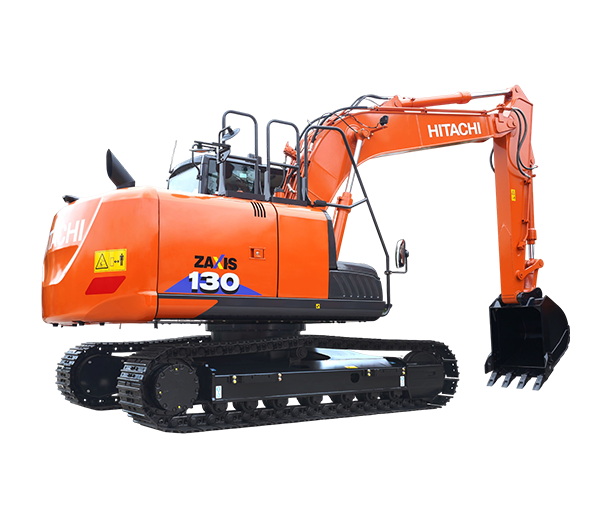
4. Technical Reference: ZX130-6A and Similar Hitachi Models
When comparing excavators, I always recommend checking the exact model suffix and market. The name ZX130-6A, ZX130C-6A, ZX130-6, and ZX130-7H may look similar, but they are not automatically identical machines.
For example, Hitachi's published North American ZX130-6 brochure lists a 3.01 m arm, 4.60 m boom, 600 mm triple-grouser shoes in its reference configuration, and a 2,950 kg counterweight. The China-market ZX130C-6A documentation uses a 2,400 kg counterweight and 500 mm shoes. This is a good example of why I do not copy one regional specification sheet into another market.
| Model / Reference | Rated Power | Operating Weight | Maximum Digging Depth |
|---|---|---|---|
| ZX130C-6A | 74 kW | 12,900–13,000 kg | 5,540 mm* |
| ZX130-6 | Market-specific configuration | Market-specific configuration | Configuration dependent |
| ZX130-7H | 74.9 kW net | 14,000–15,400 kg | 6.03 m |
*ZX130C-6A working-range figure based on the published 2.52 m arm configuration. ZX130-6 and ZX130-7H figures come from separate Hitachi market documentation and should be treated as comparison references, not identical specifications.
The current ZX130-7H, for example, is a later-generation machine with published net power of 74.9 kW, operating weight of 14,000–15,400 kg, maximum ground-level digging reach of 8.65 m, and maximum digging depth of 6.03 m. I use these figures only to show how specifications can change between generations and markets.
5. Where I Would Use This Type of Excavator
A medium hydraulic excavator can fit many industries because its size gives it a useful balance between working ability and mobility.
General construction: I would use this class of excavator for foundation digging, site preparation, trenching, and earthmoving.
Road construction: It can support drainage work, roadside excavation, material handling, and preparation work.
Municipal projects: Underground utility installation, water drainage, landscaping, and maintenance work can benefit from a machine of this size.
Landscaping: With suitable buckets or smaller attachments, the machine can handle soil movement, grading, and site preparation.
Agriculture: Farm drainage, pond work, land preparation, ditch cleaning, and material handling are common applications.
Quarry and aggregate work: The excavator can be used for secondary excavation and loading tasks where the working scale matches its capacity.
Demolition: With the correct attachment and protection package, a medium excavator can support controlled demolition and material sorting.
I would not select a machine simply because its name matches a project. Ground conditions, lifting requirements, attachment weight, transport limits, working radius, and local emissions regulations all need to be checked first.
6. Manufacturing and Quality Checks I Focus On
At HKLOONG, I treat excavator manufacturing as a complete process rather than simply assembling components. The structure needs to withstand repeated loads, the hydraulic system needs clean and stable operation, and the final machine needs to match the intended working conditions.
The first area I pay attention to is the main structural frame. The boom, arm, upper frame, and undercarriage are exposed to repeated forces during digging and swinging. Welding quality, plate alignment, joint design, and stress control therefore matter.
The hydraulic system comes next. Clean hydraulic oil, correct hose routing, reliable seals, properly matched valves, and suitable filtration all affect long-term operation. Small problems in a hydraulic circuit can become expensive if they are ignored.
I also check the relationship between the engine, hydraulic pump, control valve, and working attachment. These parts should work as one system. More power does not automatically mean better performance if the hydraulic system or attachment is poorly matched.
Before delivery, I prefer a practical inspection process that covers engine operation, hydraulic movement, travel, swing, attachment response, safety equipment, leakage checks, and general assembly quality. For customized equipment, I also consider the customer's working environment before final configuration.
| Inspection Area | What I Check | Why It Matters |
|---|---|---|
| Structural system | Boom, arm, frame, welds, pins and joints | Supports repeated working loads |
| Hydraulic system | Pumps, valves, hoses, cylinders and filters | Affects digging response and control |
| Undercarriage | Tracks, rollers, sprockets and tension | Supports travel and ground stability |
| Engine system | Cooling, fuel, lubrication and operating condition | Supports reliable daily operation |
| Cab and controls | Monitor, controls, seat, visibility and safety items | Improves operator control |
7. Why I Work With HKLOONG for Excavator Solutions
When I work on an excavator project at HKLOONG, I start with the job rather than forcing every customer into the same machine configuration. A contractor working on urban drainage has different needs from a quarry operator. A landscaping company needs different attachment options from an agricultural customer.
HKLOONG Heavy Industry Technology (Hefei) Co., Ltd. combines equipment R&D, precision manufacturing, quality testing, customized modification, and global distribution. Our proprietary HKLOONG brand covers crawler excavators, wheel loaders, backhoe loaders, and amphibious wetland excavators.
I also pay attention to the details that become important after the machine reaches the jobsite. Transport dimensions, attachment selection, hydraulic auxiliary circuits, operating environment, service access, and maintenance requirements should be discussed before ordering, not after delivery.
For customers comparing a ZX130-6A Hitachi Construction Machinery Hydraulic Excavator with other 13-ton-class excavators, I recommend building the comparison around actual working conditions. Engine power, operating weight, bucket capacity, digging depth, hydraulic flow, attachment compatibility, transport requirements, and service support should all be reviewed together.
This approach gives buyers a clearer picture of what they are actually paying for. It also helps avoid choosing a machine that is too small for the job or unnecessarily large for the site's access and transport conditions.
8. FAQ About ZX130-6A Hitachi Construction Machinery Hydraulic Excavator
Is ZX130-6A a 13-ton excavator?
Yes, the published China-market ZX130C-6A reference data places its operating weight at about 12.9 to 13.0 tonnes. However, exact operating weight depends on the regional model and installed configuration.
What is the engine power of the ZX130C-6A?
Hitachi's China-market documentation lists an engine rated power of 74 kW, or 101 PS. Buyers should check the exact machine documentation because engine specifications can differ by market, emissions standard, and model version.
What bucket size does the ZX130C-6A use?
The published reference configuration lists a 0.52 m³ ISO heaped H-type bucket. Bucket selection should always be matched with material density, attachment weight, working range, and hydraulic configuration.
What jobs can a 13-ton hydraulic excavator handle?
I would consider this class for construction, trenching, road work, municipal projects, landscaping, agriculture, material handling, and selected quarry or demolition applications. The correct attachment and configuration are important for each job.
Can an excavator use a hydraulic breaker or other attachments?
Yes. Hydraulic breakers, grapples, augers, thumbs, compactors, and other tools can be used when the excavator has the correct hydraulic circuit, mounting system, flow, pressure, and attachment capacity.
Is the ZX130-6A a HKLOONG excavator?
No. The ZX130-6A is a Hitachi model designation. I use publicly available Hitachi specifications as an industry reference in this article. HKLOONG is a separate manufacturer and brand with its own excavator product range and configurations.
Final Thoughts
For me, the value of a medium hydraulic excavator comes from balance. It needs enough power to dig and move material, enough stability for demanding work, practical dimensions for transportation, and controls that allow the operator to work accurately.
The ZX130-6A Hitachi Construction Machinery Hydraulic Excavator is a useful reference when evaluating this class of equipment because its published configurations show how engine output, hydraulic capacity, working equipment, undercarriage design, and operating weight work together.
At HKLOONG, I take the same practical view when developing and supplying construction equipment. I look at the complete working system, from machine structure and hydraulic performance to attachments, maintenance, transport, and the conditions where the excavator will actually be used. That is the information I believe buyers need before making a serious equipment decision.



 WhatsApp
 Phone
Phone E-mail
 Message