
 Español
 Pусский
 Français
 العربية


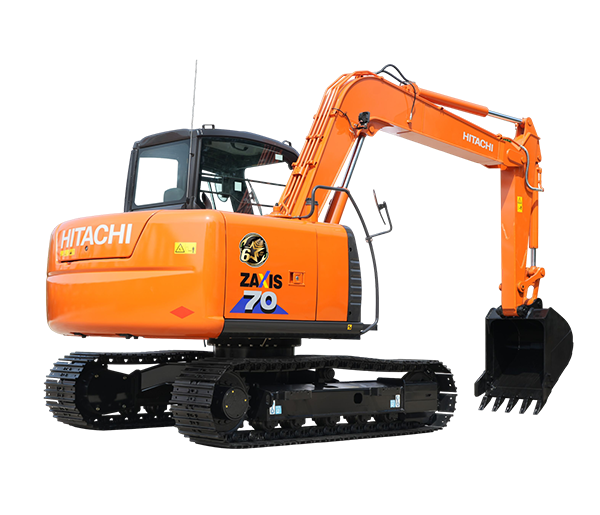
When I evaluate a compact crawler excavator, I do not look at engine power alone. I want to know how the machine behaves when digging, how easily it can move around a jobsite, how the hydraulic system responds, and how much work the operator can complete during a normal day. For this reason, the ZX70/75-6A Hitachi Construction Machinery Hydraulic Excavator is a useful reference for understanding what a modern 7-ton class Excavator can offer.
The Hitachi ZX70-6A and ZX75-6A are compact crawler Excavators developed for construction, earthmoving, trenching, landscaping, municipal work, agriculture, and other applications where a machine needs to balance working ability with manageable size. According to Hitachi Construction Machinery China's published 6A documentation, the ZX70-6A has an operating weight of 6,710 kg, while the ZX75-6A is listed at 7,280 kg. Both use a 35.9 kW gross-rated engine and are available with bucket capacities around 0.33 to 0.38 m³ depending on configuration.
At HKLOONG Heavy Industry Technology (Hefei) Co., Ltd., I work with construction equipment from a practical engineering point of view. Our business covers equipment R&D, precision manufacturing, quality testing, customized modification, and global distribution. Our HKLOONG product range includes crawler excavators, Wheel loaders, Backhoe loaders, and amphibious Wetland excavators, so I pay close attention to the details that affect actual jobsite performance.
1. Why I Consider the ZX70/75-6A a Practical Excavator Class
A 7-ton class excavator is useful because it sits between small Mini Excavators and larger 10- to 20-ton crawler excavators. It has enough weight and hydraulic capacity for serious excavation work, while remaining relatively easy to transport and position on smaller construction sites.
For me, this balance is important. A contractor may need to dig drainage trenches, prepare a building site, clean a ditch, load soil, remove old concrete, or work around existing roads and buildings. A machine that is too large may create transport and access problems. A machine that is too small may take too long to complete the same work.
The ZX70/75-6A configuration is built around a 3.053-liter four-cylinder engine. Hitachi's published specifications list 35.9 kW gross power and 34.1 kW net power at 2,000 rpm. The hydraulic system uses three variable-displacement axial piston pumps, with maximum flows of 2 × 60 L/min plus 1 × 50 L/min. A separate gear pump provides pilot flow.
| Reference Specification | ZX70-6A | ZX75-6A |
|---|---|---|
| Engine gross rated power | 35.9 kW / 48.8 PS | 35.9 kW / 48.8 PS |
| Engine net rated power | 34.1 kW / 46.4 PS | 34.1 kW / 46.4 PS |
| Operating weight | 6,710 kg | 7,280 kg |
| Standard bucket reference | 0.33 m³ | 0.33 m³ |
| Optional light-duty bucket | 0.38 m³ | 0.38 m³ |
| Track shoe width | 450 mm | 450 mm |
Source: Hitachi Construction Machinery China, ZAXIS-6A ZX70/75-6A official product documentation. Actual delivered specifications may vary by configuration.
2. How I Understand the Hydraulic Working System
An excavator may look complicated from the outside, but its basic working process is straightforward. The engine supplies mechanical power to the hydraulic pumps. The pumps move hydraulic oil through the control system. The control valves then send oil to the boom cylinder, arm cylinder, bucket cylinder, swing motor, or travel motors.
This is what allows me to control the machine with relatively small movements of the operating levers. When I pull the arm inward, hydraulic oil moves the arm cylinder. When I operate the bucket control, oil is directed to the bucket cylinder. When I swing the machine, the swing motor rotates the upper structure.
The ZX70/75-6A uses an independent three-pump hydraulic arrangement. Hitachi describes the third pump as independently supplying swing and dozer-blade operations. I find this design interesting because it can reduce hydraulic interference when several functions are used together.
For example, when I am digging and then need to swing the upper structure toward a truck, the hydraulic system has to manage several movements without making the machine feel unpredictable. Smooth control is especially important when I am working near buildings, utility lines, roads, or other equipment.
The published specifications list a main working hydraulic relief setting of 26.0 MPa, a swing circuit setting of 22.6 MPa, and a travel circuit setting of 31.4 MPa. These are technical reference figures from Hitachi's documentation, not HKLOONG specifications.
3. Main Features I Would Check Before Buying
Three-Pump Hydraulic System
The three-pump system is one of the most interesting features of the ZX70/75-6A. Instead of making every function depend on exactly the same hydraulic supply, the system separates certain functions. Hitachi states that the independent swing pump can reduce hydraulic interference during swing and dozer-blade operations.
Useful Working Equipment
The official reference configuration uses a 3.72 m boom and a 1.62 m arm. The bucket options listed in the brochure include a 0.33 m³ standard bucket and a 0.38 m³ light-duty bucket. This gives operators some flexibility when matching the bucket to soil and job type.
Dozer Blade on the ZX75-6A
The ZX75-6A is listed with a large box-type dozer blade. I see this as a useful feature for contractors who regularly perform backfilling, rough grading, site cleanup, and soil leveling. It means the excavator can do more than simply dig and swing.
Compact Crawler Layout
The 450 mm triple-grouser track shoes provide a practical footprint for a machine in this class. The crawler system also uses hydraulic track tensioning and reinforced track chains with sealed pins. These details matter because the undercarriage takes a lot of punishment when an excavator works on rough ground.
Operator Environment
I also pay attention to the cab because an excavator is only as effective as the person operating it. The published 6A specification lists a suspension seat, lightweight pilot handles, air conditioning, a large cab, a multifunction LCD monitor, Bluetooth, USB and AUX functions, and four fluid-filled cab mounts.
The cab structure is also designed to meet TOPS and ROPS protection standards in the referenced configuration. LED work lights are positioned on the boom and cab roof, which can be useful when the working day continues into low-light conditions.
4. Technical Comparison With Other Hitachi Excavator References
When I compare excavators, I prefer to compare machines from similar working classes. I also check the model generation carefully. A ZX75-6A is not the same machine as a ZX75US-5B, even though both are around the same general weight range.
The following table shows how the ZX70/75-6A compares with another published Hitachi 7.2-ton-class machine. The ZX75US-5B is a short-reach model designed for more specialized applications, so this is an engineering reference rather than a direct product-equivalence claim.
| Specification | ZX75-6A | ZX75US-5B Reference |
|---|---|---|
| Operating weight | 7,280 kg | 7,200 kg |
| Engine rated power | 35.9 kW gross | 41.8 kW |
| Standard bucket | 0.33 m³ | 0.28 m³ |
| Travel speed | Up to 4.8 km/h | 5.0 / 3.1 km/h |
| Gradeability | 70% / 35° | 70% / 35° |
Source: Hitachi Construction Machinery China ZX70/75-6A official documentation and Hitachi Construction Machinery Japan ZX75US-5B published specifications. The two models have different designs and intended applications.
The comparison shows why I do not judge an excavator by horsepower alone. The ZX75US-5B uses a short-reach configuration for specialized work, while the ZX75-6A is a more general-purpose machine. Bucket size, hydraulic layout, working equipment, machine dimensions, and attachment requirements can be just as important as engine output.
| ZX70/75-6A Reference Data | Published Figure | Practical Meaning |
|---|---|---|
| Engine displacement | 3.053 L | Four-cylinder power unit for this equipment class |
| Main hydraulic pumps | 3 variable axial piston pumps | Supports separate working functions |
| Main pump flow | 2 × 60 + 1 × 50 L/min | Reference for hydraulic capacity |
| Swing speed | 10.2 rpm | Supports repeated swing cycles |
| Maximum traction | 53.9 kN | Helps the machine travel over difficult ground |
| Gradeability | 70% / 35° | Published climbing reference |
Source: Hitachi Construction Machinery China, ZX70/75-6A official technical specifications.
5. Applications I Would Consider for This Excavator
I see the 7-ton crawler excavator as a flexible machine rather than equipment designed for just one industry. The final application depends on the bucket, auxiliary hydraulic system, ground conditions, and local operating requirements.
Building construction: I would use this class for foundation excavation, trenching, earthmoving, and general site preparation.
Road and municipal work: It can support drainage excavation, roadside maintenance, utility installation, and site cleanup.
Landscaping: The machine can move soil, prepare planting areas, dig drainage channels, and handle grading work.
Agriculture: Farm drainage, pond maintenance, ditch cleaning, land preparation, and material handling are suitable applications.
Demolition: With an appropriate hydraulic breaker or other attachment, the excavator can support selected demolition and concrete-breaking jobs.
Material handling: Grapples and other compatible attachments can expand the machine's use beyond ordinary digging.
Rental fleets: A machine in this size range can be useful for rental companies because it can serve several types of contractors.
Before I select an excavator for a specific project, I check access width, transport weight, ground pressure, digging depth, required attachment weight, hydraulic flow, and local emissions requirements. These details often matter more than a simple horsepower comparison.
6. Manufacturing Details I Pay Attention To
At HKLOONG, I believe excavator quality starts with the structure. The boom and arm repeatedly absorb digging loads, so welding, material selection, joint design, and pin connections all deserve attention.
The ZX70/75-6A reference design also provides some useful examples. Hitachi's published documentation lists box-section welded boom and arm construction, HN bushings at the arm connection, dust seals on bucket pins, and tungsten-carbide coating on the arm front section. These details are intended to address wear in areas that receive repeated movement and load.
The upper frame is another area I examine. The published specification describes a D-section frame designed to resist deformation. The undercarriage uses reinforced track components and hydraulic track tensioning. These are not exciting features to look at, but they become important after hundreds or thousands of operating hours.
Hydraulic cleanliness is equally important. Filters, hoses, cylinders, pumps, and valves all depend on clean hydraulic oil. A small leak or contaminated oil can eventually affect several components, so I treat hydraulic inspection as part of normal equipment care rather than something to consider only after a failure.
At HKLOONG, our manufacturing approach covers R&D, precision manufacturing, quality testing, customization, and global distribution. When I work on equipment requirements, I look at the complete machine instead of treating the engine, hydraulic system, structure, and attachment as separate products.
7. Why I Choose a Practical HKLOONG Equipment Approach
When a customer is comparing a ZX70/75-6A Hitachi Construction Machinery Hydraulic Excavator with other compact crawler excavators, I recommend starting with the actual work. If the machine will mainly dig trenches, the working range and bucket selection matter. If it will use a breaker, the auxiliary hydraulic circuit becomes more important. If it will work on farms, ground conditions and attachment flexibility deserve more attention.
HKLOONG operates its own brand and develops a broader range of construction equipment, including crawler excavators, wheel loaders, backhoe loaders, and amphibious wetland excavators. This gives me a wider engineering view when matching machines to different environments.
I also understand that overseas buyers often need more than a machine specification sheet. They may need configuration advice, attachment matching, transport information, customization, technical communication, and after-sales support. I prefer to discuss these points before the order so that the machine is configured around the real job.
For buyers searching for a 7 ton hydraulic excavator, compact Crawler Excavator for Construction, ZX70-6A excavator reference, ZX75-6A crawler excavator, or medium Compact Excavator for agricultural and municipal work, I recommend comparing the complete operating package rather than focusing on one specification.
8. FAQ About ZX70/75-6A Hitachi Construction Machinery Hydraulic Excavator
What is the operating weight of the ZX70-6A?
Hitachi's China-market 6A documentation lists the ZX70-6A at approximately 6,710 kg operating weight in the referenced configuration.
What is the operating weight of the ZX75-6A?
The published reference specification lists the ZX75-6A at approximately 7,280 kg. Actual machine weight can vary according to configuration and installed equipment.
What engine does the ZX70/75-6A use?
The published China-market specification identifies a 4TNV94L-ZCWC four-cylinder engine with 3.053 L displacement. Gross rated power is listed as 35.9 kW, while net rated power is 34.1 kW, both at 2,000 rpm.
What is the bucket capacity of the ZX70/75-6A?
The official reference documentation lists a 0.33 m³ ISO heaped bucket as standard and a 0.38 m³ light-duty bucket as an available option. Bucket selection should depend on soil type and the intended work.
What hydraulic system does the ZX70/75-6A use?
The published machine specification uses three variable axial piston main pumps with maximum flows of 2 × 60 L/min and 1 × 50 L/min, plus a gear-type pilot pump with a maximum flow of 20 L/min.
Can this excavator use a hydraulic breaker?
Hitachi's 6A documentation describes a dedicated breaker configuration with attachment piping, a breaker-specific return filter, a second relief valve, and other related equipment. Actual attachment compatibility should always be checked against the specific machine configuration.
Is ZX70/75-6A a HKLOONG model?
No. ZX70/75-6A is a Hitachi Construction Machinery model designation. I use its published technical information here as an industry reference. HKLOONG is an independent construction equipment manufacturer and brand with its own crawler excavator and other machinery configurations.
Final Thoughts
For me, the main value of the ZX70/75-6A Hitachi Construction Machinery Hydraulic Excavator is the balance between size, hydraulic capability, digging performance, transport practicality, and attachment flexibility. It represents a useful 7-ton-class excavator configuration for contractors who need more working capacity than a mini excavator but do not want the footprint of a much larger machine.
When I evaluate this type of equipment at HKLOONG, I look beyond the product name. I check the structure, hydraulic system, undercarriage, operator environment, attachment requirements, working conditions, maintenance needs, and transport limitations. That is how I approach construction machinery: start with the real job, understand the technical requirements, and then match the machine to them.



 WhatsApp
 Phone
Phone E-mail
 Message